Thursday, January 23, 2014

Sisa (Gerardo de Leon, 1951)

Pic thanks to Video48

Mother dearest

Gerardo de Leon's Sisa (1951) is amazing, not the least because the director takes a memorable if minor character from Filipino activist and intellectual Jose Rizal's seminal political novel Noli Me Tangere (Touch Me Not) and makes her the protagonist of his film. Tom Stoppard tried something similar on the theater stage with Rosencrantz and Guildenstern are Dead some fifteen years later; a film version followed forty years after that, and achieved only a fraction of de Leon's visual panache.

Thursday, January 16, 2014

The best of 2013

Counting down, the in my book best films of 2013:

10. Post Tenebras Lux, Carlos Reygadas, 2012

Not a big fan of the distortion effect used around the edges of the frame in the exterior scenes (Gerardo de Leon did the same thing in his Banawe, and it felt and still is a silly gimmick that obscures otherwise gorgeous images) but Carlos Reygadas' semi-autobiographical film told in the style of Luis Bunuel with a generous helping of David Lynch is a fascinating anti-narrative. It does speak of patriarchal anger and spousal passivity and how one enables the other (demonstrated in an erotic interlude that takes place in a sauna, where the rooms are named after artists and philosophers) and of children's dreams portending quiet apocalypses (cows surround a little girl, lowing; the sky literally rains blood) but to pin Reygadas' work down to anything more definite is to risk looking silly, even wrong; this is a Rorschach blot of a film that you interpret at your peril. 
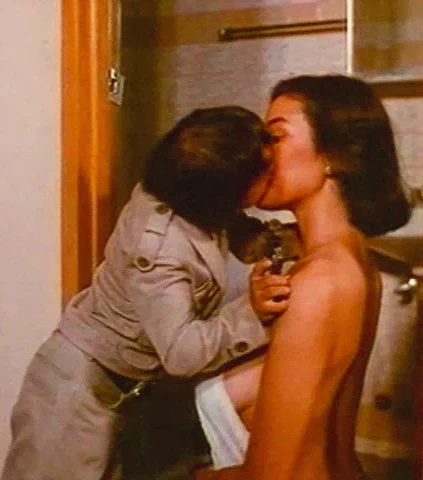

9. The Search for Weng Weng, Andrew Leavold, 2007

No one loves a film more than a cinephile, and few love Philippine cinema more, apparently, than Andrew Leavold, owner of the late Trash Video (it's closed since), an Australian specialty store that traded in cult and bizarre titles. Leavold called his establishment 'Trash,' but that's to entice his customers; it's clear from his debut documentary that he really means 'treasure,' and he treasures few films as he does Eddie Nicart's For Y'ur Height Only (1981), featuring the one and only Weng Weng, a 2' 9” actor reportedly named after a Filipino drink--so much so Leavold spent seven years to bring his film to the (big, small, video) screen.

Mind you, For Y'ur Height Only isn't in the tradition of Lino Brocka or Ishmael Bernal; the movie was meant to parody the James Bond flicks and was produced on a budget tinier than its diminutive star. But what Leavold reveals in his prodigiously affectionate piece of cinejournalism is that there are arcane pleasures to be found in this more disreputable branch of Philippine cinema (among others, that Weng Weng was a pretty good martial artist who consistently delivered a vicious roundhouse kick, and that he wooed onscreen some of the more beautiful actresses in the industry, in various stages of undress), not to mention drama and pathos galore (Weng Weng was never properly paid for the millions he made his producers, and died in relative obscurity). It's as if Leavold were practicing a paraphrase of Jean-Luc Godard's dictum: the best way to pay tribute to a beloved movie (and the wild and rollicking cinema behind it) is, in effect, to make another movie.

8. Fruitvale Station, Ryan Coogler, 2013

Coogler's docudrama, about Oscar Grant lll's very last day before he is shot by the San Francisco transit police on New Years' Day, 2009, may be manipulative--it adds details that help soften the outlines of the youth's hard-luck life--but it's still powerful testament to the fragility of a young black man's life in modern America.

7. To the Wonder, Terence Malick, 2012

Not as expansive in scope and intense in feeling as his Tree of Life (2011) and he still hasn't found the sense of humor he lost not long after making Badlands (1973), but Malick's latest does inspire the film's eponymous emotion, if you don't happen to insist on straightforward narratives and clear character motivations. Gorgeous cinematography and vague voiceovers are par for Malick's works, of course, but here the vagueness hints at people who are unhappy and can't express exactly why they're unhappy--and this lack of eloquence, this inability to communicate may be key to their dilemma. Easy to label this as a pretty picture with pretentious ambitions, but the sight of Ben Affleck, Olga Kurylenko, Rachel McAdams and Javier Bardem aching to reach out to each other and failing to make contact is a sight a touch too disturbing to simply dismiss. Not major Malick, but better than most Hollywood productions out there.

6. American Hustle, David O. Russell, 2013

Not as gritty as his The Fighter, or as imaginatively idiosyncratic as his I Heart Huckabees (in my opinion his best work to date), but David O. Russell's semi-fictional take on the Abscam affair is funny, sexy, and not a little poignant: the character sketch of a con man (Christian Bale)--his physically and morally repugnant aspects as well as his somewhat mystifying appeal--is worth the price of admission. Shot in Russell's signature hand-held style (with thankfully minimum shakiness) and stitched together to Russell's distinctively nervy rhythms, the film includes Jennifer Lawrence and Jeremy Renner in star turns, and Amy Adams as Bale's faux English aristocrat mistress (my favorite performance in the picture). It's lightweight Russell that resembles too closely Scorsese back in the '70s but still worth the watch.

5. Iskalawags, Keith Deligero, 2013

Taking a page off of Jean Vigo's Zero for Conduct and possibly Mario O'Hara's Pangarap ng Puso (Demons), Deligero's bildungsroman has something of their experimental, freewheeling spirit. A group of youths embarks on a series of often hilarious, usually profane, sometimes sensual escapades, and along the way Deligero unleashes a barrage of cinematic no-budget tricks and surreal images--an impromptu re-enactment of a Filipino action sequence; a chicken massacre; a blackboard covered with spermatozoa--giving us one of the most exciting and original films of the year.

4. The Wolf of Wall Street, Martin Scorsese, 2013

Call it Scorsese's Inferno: on the surface a three-hour celebration of the excesses of the '90s--sex, drugs, and money rolls--ramped up to 11 by the addictive camera and editing style, the film (thanks to the director's unrelenting need to resist doing the predictable or even acceptable thing) makes its slow dive into perdition and ruin so gradually you're almost convinced the slide began at the very start, when he was a dewy newbie in Wall Street, and that it was in Jordan Belfort's very nature that he rise high and then lose it all (or lose as much as a formerly all-powerful white male in America can possibly lose and still clinch a book deal and movie of his life's story). All of Scorsese's films are acts of penance in their way (for him or his surrogate protagonists), and this one is no different: go, sin no more.

3. The Grandmaster, Wong Kar Wai

Call Wong's latest a corrective to Ashes of Time: the fight sequences here are gorgeously shot and edited and coherent, where the fight sequences in the previous work are sheer confusion. Sadly, many of the filmmaker's devotees have deserted him for selling out and delivering a halfway conventional biopic, of legendary martial arts master (and trainer of Bruce Lee) Yip Kai-man (also known as Ip Man). I see it differently, as Wong's most radical film yet: a monstrous chimera of a creature that starts out as straightforward biopic, then evolves into something more wayward, more volatile, more inimitably Wong--in effect, a film to confound both ordinary viewers and Wong's own fans.

2. Philomena, Stephen Frears

It's an odd-couple comedy: retired nurse Philomena Lee teams up with journalist/author/disgraced civil service officer Martin Sixsmith in a quixotic search for her son, which she was coerced by nuns to give up for adoption years ago (it's also yet another true story, making this a year stuffed with based-on-real-life adaptations). Judi Dench and Steve Coogan score points off of Philomena's relative guilelessness and Sixsmith's grating snobbishness, and otherwise put up an entertaining enough comic act to let us relax our guard--and then dive in for the dramatic kill. There is some question as to the ethics of resurrecting one nun to be the target of the film's very clear scorn (though the accusations leveled at her and her fellow sisters are, according to Sixsmith, true), but the real question in my mind is: will the Church allow this to be screened in Manila? Because Philomena's faith is real, and the way she struggles to maintain that faith in the face of her Church's abuses is to my mind an issue we all should face, and struggle with as well. Far and away the best thing Frears has ever done. 

1. Norte, the End of History, Lav Diaz

Some might consider Lav Diaz's latest at four hours a compromised condensation (his usual films run from six to eight hours, and are based on his own scripts--this is his first attempt at translating someone else's writing to the big screen); instead it's his most visually gorgeous work--incidentally his first in color since, oh I don't know when--and his most overtly Dostoevskian, a transposition of Crime and Punishment to Filipino society. It's also the most richly humane, most rounded film I've seen in 2013, an unflinching view of both existential evil and uncomplaining good, though Diaz's attitude to either quality is actually more complexly ambivalent than I've suggested. In terms of ambition and uncompromising art, the film of the year.

Postscript:

Didn't do a 'Best of 2012;' frankly speaking, after the loss of various major film artists of Philippine cinema that year, I couldn't muster the enthusiasm to celebrate anything, much less draw up a list. 

This represents what I believe to be the best of what I've managed to see in 2013, whether released in Manila or elsewhere; if they haven't reached local theaters they will soon, or will be released in DVD or online, in which case I hope this can serve as a guide to what might be worth watching in the coming months. Sadly, my year-long fast meant I failed to write about or note what I considered the finest film of the past few years, and Lav Diaz's strongest work to date: Florentina Hubaldo, CTE, about a young woman suffering from chronic traumatic encephalopathy (the answer as to why she should suffer from what is basically an aging boxer's disease is the source of much of the film's unsettling power). Against that massive tragedy, all else--Hollywood or otherwise--seemed puny in comparison.

First published in Businessworld, 1.9.14

Thursday, January 02, 2014

American Hustle; The Wolf of Wall Street; Frozen (Chris Buck, Jennifer Lee); The Time of the Doctor (Jamie Payne; Dr. Who Christmas Special)


(Warning: plot twists of the various titles mentioned are discussed in close and explicit detail)

Do the hustle

Call it the Year of True-Life Movies:  American Hustle is David O. Russell's take on the Abscam scandals, some of which, he cagily admits in an opening title, "actually happened." The succeeding events at most provide a rough outline on which Russell hangs a series of sexy, funny, occasionally poignant encounters between memorably sleazy characters, played by some very smart (and smart-looking) actors, filmed in the director's distinct adrenaline-rush style (frenetic cutting and handheld camerawork that somehow retains visual coherence), perhaps channeling filmmaker Martin Scorsese more than usual what with the outrageous '70s outfits and tremendous '70s hair. Bradley Cooper's Jheri Curls, Christian Bale's swollen belly, and Jennifer Lawrence's blonde fizziness got the most favorable notices from critics, but it's Amy Adam's faux English mistress--juggling her attraction to both Bale's swindler and Cooper's FBI agent and countering the threat of Lawrence's housewife--that feels more and more like the film's true heart: her and her comic struggle to remain true to a tangle of loyalties.

Some of Russell and co-writer Eric Singer's story choices are puzzling--I can see the need to depict mistrust of government, but is the Mafia that much more trustworthy, or effective? Is Russell saying you can cut a straight deal with gangsters sooner than with government, or that gangsters are so lethally effective it's better to screw the government? And granted the real-life equivalent of Bale's swindler really liked the real-life equivalent of Jeremy Renner's Camden mayor, did they really have to gloss over the fact that the latter was not as innocent as depicted onscreen?

Not perhaps as drenched in gritty pathos as Russell's The Fighter, or as stubbornly, imaginatively idiosyncratic as his I Heart Huckabees (in my book his masterpiece), but still a fine entertainment, and any excuse to watch Russell flex his considerable filmmaking muscles is in my book a perfectly valid excuse. Good hustle, sir.


The lower depths

There's Russell's vivid approximation of a Martin Scorsese film, and then there's the original. The Wolf of Wall Street is everything American Hustle is--sexy, funny, fluid, profane--and more: disgusting, despairing, demented, in both a good and bad way. 

Why watch a hundred and sixty plus minutes of Leonardo DiCaprio sniffing and screwing and screaming when Ray Liotta had done all that back in '90 and Robert De Niro had done it best (in my book, anyway) in '95? Because, well, no one does it quite the way Scorsese does, and I suppose if anyone has to repeat himself--switching the milieu from '70s Brooklyn to '70s Vegas to '90s Wall Street--Scorsese's earned the privilege, charting the grotesque rise (through violence, through business, through deceit) and ignominious fall (through violence, through hubris, through sheer accident) of a white male in American society yet again. It's a story so vast and broad (if not exactly profound) it could stand being repeated twice, the volume cranked up louder with each retelling--or at least that was what Scorsese must have thought when he did this film.

Christina McDowell makes a compelling case that the story shouldn't be told at all; that if anything Scorsese has done us a disservice telling Belfort's story with such cinematic brio. It's a heartfelt, harrowing letter, and should give the viewer pause; Scorsese does much in the picture but one thing he doesn't do is tell the victim's side of the story.

Hard to see Scorsese doing that, though. He rarely editorializes--simply tells the tale, whether it's Jordan Belfort's or Henry Hill's or Jake LaMotta's; shows us the glamor and dirt, then shows us the fall. The most he'll give us by way of message is that the man--any man--gets his, eventually. Scorsese practically insists on this point--even Jesus in The Last Temptation of Christ is punished for wanting an ordinary life. We see Belfort snort up mountains of coke; we also see him struggle to his Ferrari, barely able to crawl because he's overdosed on 'luudes. We see him fucking everything in sight; we also see him atop his wife in one particularly excruciating scene, where she clearly doesn't want him there (I personally don't think Margot Robbie got near enough the credit she deserved).

And is all that high life--the booze, drugs, naked girls--necessary? Scorsese doesn't quite sell the decadence: you see what's happening, you get loud rock on the soundtrack, but he doesn't linger; the excess comes at you in a rush much the way you imagine it came at Belfort, or at least the way Scorsese imagines it must have come at Belfort. Scorsese's acting as anthropologist here, a cool observer with maybe a bit of inside information on the effects of being high (and other less pretty symptoms). He shows us the arc of Belfort's addiction (not to drugs--when he's compelled to quit he does so without much struggle--but to money and the power that money brings) in a way that's fascinating, almost addictive. We crave the high of Scorsese's style, the way Belfort--and Hill, and Rothstein, and LaMotta--crave the high of their respective vices. 

If Scorsese is guilty of excusing or prettifying any of the facts, it's in suggesting that Belfort victimized mostly the rich (a lot of small business entrepreneurs got hurt); Belfort himself claims to have turned a new leaf (debatable) and has announced plans to hand over the profits from book and film to victims.*

*Possibly a moot point, as the film is doing disappointing business. Which leads one to ask: the film is encouraging what? Glorifying what? Seems to me the general audience understood well enough what critics didn't: that Scorsese's picture is less an entertainment than an ordeal, one we don't sit through so much as suffer, the way Catholics suffer through Lent.

Will Belfort's proposed generosity become reality? Frankly I think Belfort hasn't stopped hustling. But the biggest disservice Scorsese may have done is to call attention to flashier predators, instead of the real criminals living quieter, more respectable lives. 

But a film that probes into big-time financial corruption probably needs a different director with a different (more sober?) approach; even then you wonder if he (the theoretical filmmaker and his proposed work) could attract enough financing--or audience--to make a difference. 

Meanwhile we've got this, Scorsese's latest, and what he does manage to do--while hardly his best work--is pretty damned good, I'd say.
 
Brain freeze

Give the filmmakers of Frozen (Chris Buck, Jennifer Lee) some credit: they take the standard-issue Disney princess and tinker with her a bit, make her more kickbutt, more assertive, less dependent on her Prince Charming (in this case a Danish lunkhead named Kristoff). In place of insensitive parents (they're killed off early) a troubled sister; in place of sneering villain, a smooth charmer. 

There's effort made in the digital animation department too, and when not being sandbagged by the inane songs one can marvel at the way the digital snow clumps and falls, or the way the digital ice gleams in the chill air (filled with digital flakes that seem suspended in silence, a nice little digital effect). 

But alas, movie, thy studio is Disney, and before long stupidity takes over. Enter an annoyingly cheerful snowman sidekick; notice the inordinate amount of time spent on extreme snow sports (sledding, tobogganing, ice sliding, etc.); marvel at the standard-issue happy ending, complete with lunkhead by the heroine's side (couldn't she opt to be single with her sister, or--better yet--shack up with a Danish hottie named Kristine instead?). 

After The Wolf of Wall Street I thought I knew something about disgust, and revulsion, and overwhelming nausea. Pfui--just had to sit through this and found myself wanting to see the Scorsese again, to wash away the thick taste of treacle coating my tongue.

Worse of all is the end credits, which reveal that the story was based on one of Hans Christian Andersen's greatest stories, The Snow Queen: about a brother, subverted into evil by a shard of glass in the heart, who runs away from home, and the loving sister who sets out to bring him back. It's a tale full of subtle psychological subtext (the brother might be undergoing the painful transitions and traumas of adolescence) and harrowing drama (the sister moves heaven and hell to find him), and really deserves a proper adaptation--by Studio Ghibli, perhaps? Certainly something far better than this mouse dropping of a movie.


Time to die

Not much I can say about director Jamie Payne and writer Steven Moffat's The Time of the Doctor except that Moffat tries to cram too much material into the hour and fifteen minutes allotted to him--though to be fair I'd say this is a far better problem to have than too little spread out over the same period of time. 

Oh, and while Moffat seems to have tied all loose ends into a more or less tight knot, the accomplishment hardly seems as significant as the special's real achievement: celebrating Matt Smith's tenure as The Eleventh Doctor before he hands the reins over to the upcoming Thirteenth, played by Peter Capaldi. 

Why, after ranging all of time and space, should Eleven waste the rest of his natural lifespan defending a piddling little town (named Christmas, of all things!) occupied by a mere few hundred lifeforms? More to the point, why waste so much of the episode's precious running time delineating Eleven's growing bond with the townsfolk, when we could instead watch the growing antagonism between Eleven and his countless foes?  

Because Eleven as Matt Smith has played and developed him through the years isn't really about foes, or fighting (or the First Question, or The Silence, or Gallifrey, or all the other piddling little subplots smaller minds have worried about all this time); Eleven as Matt Smith has played him is about the people--kids in particular--he's come to know, and who have come to know him. Smith loves the fans--the Whovians--and is loved in return, and that's what the episode's really all about.

So the premise is a bit silly--a town called Christmas, to be defended against the rising hordes--so what? It's a charming little town locked in an endless White Christmas, with a brief sunrise and sunset for variety; not a grand setting or even a logical setting for Eleven's final days, but a poetic one, a--yes--living Hallmark Holiday Card, with Daleks and The Silence and the odd wooden Cyberman hovering about the margins to add a bit of tension, a bit of cool.

And against this background Smith rallies the people; takes a moment to speak to young Barnable (Jack Hollington)--from his very first episode he's always had good rapport with children--and yes, dons rubbery age makeup that fools no one, only there's something comfortingly paternal about Smith despite his age (he's the youngest actor to ever play the Doctor), and the makeup brings this out. Do the scenes of Smith as an old man crimp his manic energy? Perhaps, but they complete him, or our image of him, filling out the portrait in our heads of his entire unnaturally long life, from moment of arrival to moment of departure (added bonus that when he's re-energized--wrinkled and feeble and bowed, suddenly bellowing at the top of his voice--it's a mighty moment). 

Eleven's final scenes are blessedly brief--no extended bathos a la Russell T. Davis' sendoff of David Tennant--but no less finely written. Actually Moffat's suffered a lot of (to my mind undeserved) grief over his plotting (complex, to put it kindly) and characterization (eccentric, says fans; shallow and annoyingly cute, says non-fans), but I say he's at least master of the brief vignette that drives a barbed hook to the heart, and here manages two such scenes: Clara's grandmother's anecdote ("I wanted everything to stop.") and Handle's passing (which channels both Castaway and, weirdly, Bring Me the Head of Alfredo Garcia). 

"I will not forget one line of this; not one day," Smith promises, and we believe him--at that moment man and character seems to have perfectly fused, in intent, in feeling, in our feelings for him. Moffat allows Eleven a glimpse of "the first face this face saw," a kind of circling back or return, not to mention discarding (the bow tie falling to the floor), and then--zap. New face, moved on. We're caught off-guard but that's Moffat for you: never quite doing the expected thing. Farewell, Mr. Smith; we will miss you.

1.2.14

Monday, December 30, 2013

Noli Me Tangere (Touch Me Not, Gerardo de Leon, 1961)


Can't touch this

Even with a perfect print, I can't imagine anyone saying De Leon's Noli Me Tangere (Touch Me Not, 1961) is a perfect film. While the casting of the men is impeccable (Eddie Del Mar as Crisostomo Ibarra, Oscar Keesee, Jr. as Padre Damaso, the great Leopoldo Salcedo as Elias), the women (Edita Vital as Ibarra's beloved Maria Clara, Lina Carino as the hapless Sisa) seem to have been hired more for their pretty faces than their acting abilities.

Actually the film's true star is De Leon' style, virtually an encyclopedia of low-angled shots, striking deep focus compositions, dramatic lighting, on-camera effects, and precision cutting--the variety in turn complementing the collection of anecdotes, plot twists, and melodramatic confrontations that made up much of Rizal's novel. If the results are not perfectly satisfying, perhaps that's in part due to the fact that De Leon is a master of Gothic drama, and Noli a dark but essentially comic satire of Philippine society; only later, when the forces of oppression rise up triumphant does the film truly come into its own. Perfect marriage of material and filmmaking sensibility had to wait until El Filibusterismo (The Filibuster, 1962), when the ambivalently evil Simoun (Pancho Magallona, in what may be the greatest performance in Philippine cinema) plotted revenge against the all-powerful Spaniards.

Nevertheless--two boys, Crispin and Basilio, shiver like mice high up in a bell tower, where De Leon uses the claustrophobic space and enveloping darkness to suggest the shape and nature of the children's fears; when the tyrannical sacristan finally appears, De Leon momentarily wipes away the eyes' pupils, giving him the blank stare of a doll, a shark, a child's terror. When Basilio finally comes home, he learns that his long-missing, much feared father had come home before him, eaten his dinner, left; Basilio ignores his mother's news and immediately checks her for bruises (a lovely gesture that endears Basilio to us--not only is he caring, he's smart, too).

De Leon's realization of the famous scene where Sisa is arrested (famous partly because it's based on what happened to Rizal's own mother) is equally vivid. Sisa runs up the street to the camera in panic; cut to Basilio in the house, backing away; soldiers are approaching. He drops out a window, sprains his ankle, but manages to crawl away. His mother isn't as lucky; as the soldiers approach the camera, De Leon cuts to her stepping in from the side to stand in their way. She's force-marched across beautiful landscapes, past the church that was source of much of her troubles (she asks not to be humiliated before the townspeople; the soldiers order her to march two steps ahead--no more). At the station of the guardia civil she's marched past prostitutes and a hanging saddle (De Leon's not one to shy away from a sexually suggestive visual metaphor); the capitan angrily dismisses her. Sisa, running home, cries out for her two boys, both of which are now missing. She finds a torn shard of Basilio's shirt, and in one of the most beautiful shots in the film De Leon's camera gazes at her from below as she raises the fluttering piece of cloth up to the sun.

There's Ibarra and Maria Clara's party at the fisheries, where a crocodile is discovered inside the netting; a man dives in and Tarzan-fashion, wrestles with the creature. De Leon's cutting is fast and furious; there's so much splash and struggle you find yourself panicking along with the witnesses. Ibarra jumps in to help, and the sequence ends spectacularly, with men heaving on a rope and pulling out a live, roaring creature (the shot sells the sequence; seeing the monster in all its glory, you can't help but believe the two men were in mortal danger).

There's the attempt on Ibarra's life: Elias' profile as he catches wind of the plot; Ibarra's frightened glance at the cornerstone hanging fatefully above him; De Leon's thrilling yet coherent cutting of the chaos that ensues. There's Sisa--driven mad at last--urged to dance then whipped by the capitan's sexually deprived and sadistic wife, the whip like a tongue flicking about Sisa's body.

There's a shot midway through the film--Ibarra and Maria Clara walking down the street when they encounter a leper; Sisa standing beside the leper and pointing to the church tower above them; soldiers of the Guardia Civil riding up to drive the leper away--that's clearly a throwaway moment, one the viewer can easily miss, but the shot is colonial society crystallized in a single image, arguably the greatest in all of Philippine cinema. Standing at ground level, the bourgeoisie; low near the ground are derelict and outcast; towering above all--aloof and unperturbed--is the almighty Catholic Church's bell tower.

Finally there's the great phantasmagorial sequence of heroic Elias, confronted with one revelation too many, running across the novel's many landscapes with figures from his dead past (a woman prostate on the ground; a man's decayed and bloodied head in a cage; a girl floating on surf, knife buried in her bosom) bitterly accusing him of cowardice. Flawed in print and execution De Leon's Noli may be, still it stands as the definitive, most visually striking realization of Rizal's celebrated novel ever made.

(Portions of this post taken from my entry on the film found in Chris Fujiwara's Little Book of Movies)

2.19.08

Thursday, December 26, 2013

Cinemanila 2013: The Act of Killing (Anonymous, Christine Cynn, Joshua Oppenheimer); Norte: The End of History (Lav Diaz)


Killing with Lav

 Cinemanila 2013 has come around again, from Dec. 18 to 22 in the SM Aura Premier Cinema, Taguig, and its range and depth and variety of titles is--for a Filipino festival--as breathtaking as ever. I mean, where else can you find one brilliant if morally problematic film, another arguably the best of the year (and yes I've seen a few of the suspects--To the Wonder, Blue Jasmine, Gravity, Dallas Buyers Club, Captain Philips, 12 Years a Slave)?

Sight and Sound dubbed Joshua Oppenheimer, Christine Cynn and an anonymous collaborator's The Act of Killing its film of the year, and one can understand the admiration: it's a collection of interviews of gangsters commissioned to torture and execute hundreds, perhaps thousands of Communists in 1960s Northern Indonesia; not only have they not been brought to justice since but today are hailed as heroes (some anyway), even hold powerful positions in Indonesian government and society. The filmmakers, not content to simply hear what these men have to say about the killings, gave them free rein to stage and shoot said killings in any manner or style they choose: straight documentary, noir, and (most bizarre of all) a musical number with overtones of an expensively produced prayer meeting. Not a few re-enact their exploits with energy and enthusiasm, even unmistakeable glee.

On watching this my unthinking reaction was: why listen to these people? Thought about the question, thought some more; finally realized--why, that was the right question to ask all along. Or rather: yes we should listen, yes their input on the events of 1965 to 1966 has relevance even importance, but why limit the film to merely presenting their story unfiltered and unmediated--no historical context, no opposing viewpoint to complicate, if not counteract, theirs? It's like giving these people a hundred-and-sixty-minute platform to reach not just Indonesian but international audiences, accompanied by the weight of dozens of awards, the praise of hundreds of critics. Validation perhaps not of the rightness of the killings (though most make many onscreen declarations), but of the killers' humanity, charisma, charm.

"Ah,” but you ask; “what of Anwar? Doesn't he come to regret what he did?” Yes he does apparently (though many of the others are loudly unrepentant), and that's the most insidious service of all performed on behalf of these people. Every time Anwar expresses doubt about what he did I wondered: how sincere was he? When he becomes violently sick and the camera moved in to capture his distress, I wondered: how sincere are the filmmakers? Is Anwar genuinely experiencing remorse (in which case why doesn't he turn himself in?)? Was he, as he later claimed, deceived when making this picture? Or was his onscreen breakdown a brilliantly acted tale of self-redemption handed to him free and clear, his backstage pass into morally acceptable society (“I regret what I did, may I join you folks?”)?

One further question: is Cinemanila right to screen this in Manila theaters? I think so: The Act of Killing is perhaps not an ethically irreproachable work, but it's an important work, in that it has dragged (promoted?) a heinous crime involving thousands of lives into the international spotlight, complete with accolades and awards. It needs to be seen, digested, discussed; if the filmmakers fail to provide us with a mediating intelligence to suss out the meaning of what they have shown (and--trust me--much of it is appalling to watch) I'd say it's up to us to ask the questions and suss out the meanings ourselves. If Oppenheimer isn't able or willing to finish the job, maybe we should do it for him--transcribe the discussion and hand the record over, as a gift. He may or may not like what we have to say, but he might finally get his work of art.

Then there's Lav Diaz's Norte, Hangganan ng Kasaysayan (Norte the End of History) which I submit is the corrective to Oppenheimer's documentary--here is Diaz's equivalent of Anwar Congo, in the guise of Fabian (Sid Lucero), a brilliant former law student turned existential murderer (this is Diaz's unabashed re-enactment of Crime and Punishment in a Philippine setting). Fabian has killed only two souls compared to Anwar and his friends' thousands (I for one am a believer in the absolute value of a single human being), but otherwise the key details are there: the eloquence, the authority, the charisma; the intelligence and self-serving arrogance.

But his isn't the only story Diaz tells; there's also Joaquin (Archie Alemania), the unintended consequence of Fabian's crime--when Fabian escapes, Joaquin is arrested, convicted, and sentenced to life in prison in his stead. Victimizer, meet victim; unlike in Oppenheimer's film, the criminal does not get a free pass--Fabian follows Joaquin's family and his conscience torments him accordingly (this being a fiction film, one accepts without much trouble the storyteller's omniscient viewpoint...where in Oppenheimer's, a documentary (a film where the ostensible intention is to arrive at the truth), you're strangely far more reluctant to accept the veracity of the onscreen redemption).

Diaz doesn't operate according to the oversimplified calculus of good vs. evil, innocent vs. guilty; watching Joaquin we wonder just how much in his innocent goodness he's culpable for the situations he somehow magically (even comically) falls into; likewise while watching Fabian we wonder at what point do his anguished attempts at retribution become valid, maybe even acceptable. Diaz clearly has sympathy for Joaquin, but you can't help but notice that Fabian's sensibility--his critical view of the ordinary Filipino, his philosophy of fighting ignorance and evil without mercy--feels uncomfortably similar to Diaz's own.

Diaz doesn't mean to present an ethics lesson; you realize this sitting through the film's entire two-hundred-and-forty-minute length, and in fact I'd even insist it's necessary to sit through the film's comparatively long running time (comparatively; he's been known to make films that run for eight, nine, eleven hours) to realize the full extent of its complexities and ambiguities, a realization which gradually seeps in, as opposed to being baldly presented on a silver platter--or not present at all.

What distinguishes Diaz from Oppenheimer, and his collaborators? The latter gave the game away early in his film, when a gangster bullied a Chinese merchant into giving not just his daily blackmail amount but a considerable extra--the unspoken implication being that he's demanding more because there are cameras watching. At which point I realized Oppenheimer hadn't fully thought out the consequences of this scene--how the gangster would react to his presence, how it would affect the merchant--and that he probably doesn't know what he's doing at all. Diaz does--least I feel he does--and he presents, questions, provokes with the probity and passion of a real artist.

First published in Businessworld, 12.18.13

Thursday, December 19, 2013

The Hobbit: The Desolation of Smaug (Peter Jackson, 2013)

Back in The Hobbit

Putting it out and aside, my official position on Peter Jackson's The Hobbit: The Desolation of Smaug--overblown, overlong, overproduced, even thinner on characterization than the first (we have no equivalent to the unsettlingly suspenseful battle of riddles between Bilbo (Martin Freeman) and creepy reptilian Gollum (Andy Serkis); we do get a scene between Bilbo and the outsized Smaug (Benedict Cumberbatch) which sadly involves little wit and even less riddles). The eccentric charm of Tolkien's Middle Earth has largely been supplanted by elaborate action sequences, some of which are shaped suspiciously like amusement park-style theme rides (Middle-Earth Barrel Flume--With Pursuing Orcs! Erebor Mountain Forge Slide! Molten Gold Body-Surfing!), all at a Higher Frame Rate and in smashing 3D. On the other hand you do get Freeman, whose deer-in-headlights expression backed up by a steely core of decency makes for a more intriguing protagonist than his wet-noodle nephew Frodo (the incurably spaniel-eyed Elijah Wood).

A weaker chapter in the proposed trilogy, though stepping back for the longer view I find it better provisioned with humanity and humor than its longer, more epic (though Jackson tries very hard to catch up), far more solemn (more soporific?) predecessor. 

So: got that out of the way for what I really wanted to discuss--

Sex.

Where is it? Where's the copulating in this cornucopia of incident and narrative? Where's the real fun? Are wicks really so dry, weapons all uncocked--is the gunpowder all wet, p'raps? How do people reproduce in Middle Earth?

No issues about humans--at one point Bilbo and the dwarfs arrive at Laketown, and we see women, children, families--the necessary building blocks for a thriving society. But the band had also visited the wood elves of Mirkwood, and you wonder: where's the fairer sex? We have one girl--Tauriel (Evangeline Lilly)--who basically has the attention of Legolas (Orlando Bloom, reprising his role); who has the attention of the rest of the elves? Is the situation similar to The Smurfs, where Smurfette looks mighty lonely, if not totally out-of-place? Is this a we-didn't-think-of-it-so-we're-clueless deal, or a we-know-but-are-not-talking deal? Or is Tolkien kinkier than even I suspected?
 
Alas, I doubt if the latter could ever be the case; something rotten in the state of Mirkwood--but at least it's confined to the wood elves. In the other pictures we glimpse she-elves in Rivendell, and one even plays a major role--Cate Blanchett's Galadriel, a sort of cross between Queen Elizabeth and Smurfette. 

And the dwarfs? In all the movies I have not spotted a single she-dwarf. Have the dwarfs hidden them that well? Why hide them? Is Jackson so afraid he couldn't make them look pretty, hence the apparent absence?

Sex is one of the great sources of drama, the giving and withholding and pursuing of it some of the strongest motivation any character can have, in any genre of literature. Granted Tolkien wrote The Hobbit originally for kids--when his sequel expanded into a three-volume epic and he revised Bilbo's original adventure to conform more to the tone and narrative of Frodo's latter, couldn't he have tossed a she-hobbit into the Fellowship? Nothing sells better than romance, maybe even rom-com, and boy, this endlessly expanding franchise (fifteen hours (I'm estimating from the running times of original releases) and counting) could use a lot more com, maybe even more explicit rom. Lilly's Tauriel is a good start, she has twice the presence and charisma of Liv Tyler's Arwen; couldn't she have flashed a shoulder, maybe chased Orcs in bikini leather?

It's gotten so bad I've started giving Smaug a second look, and as voiced by the inimitably throaty Benedict Cumberbatch, he (she?) sounds like a salacious, seductive little devil. Isn't there a Mrs. Smaug, just to spice things up a little more? I wouldn't mind a little worm-on-worm action--no waitaminute wasn't there a movie where a dragon hooked up with a donkey--?

Yes there was, and come to think of it, the dragon-vs-hero action in the earlier pic was better, for being shorter, faster, far less pretentious. Funnier too--it parodied similar fantasy moments, and action scenes in general. Some good musical numbers, and the ending was actually affecting--the barely disguised disdain for all things Disney being the cherry atop this delectable treat.

An irascible Dreamworks adaptation of a children's book, better than Jackson's multimillion dollar fantasy? But that's what you get when you skimp on skin: dissatisfied viewers, booing at the screen and tossing their rubbers--not all empty--and yelling: "Show us the honey!"

12.19.13


Sunday, December 15, 2013

Letter from an Unknown Woman (1948 and 2004)--tribute to Joan Fontaine (1917 - 2013); Shrek Forever After (2010)

(In tribute to an actress who, if I don't exactly consider great, did appear in one of the greatest melodramas I'd ever seen. As famous as her face and roles was her lifelong feud with sister Olivia de Havilland; with this one film in my book she both settles the sibling rivalry and cements her reputation amongst the cinema immortals)