Showing posts with label Food. Show all posts

Thursday, August 03, 2023

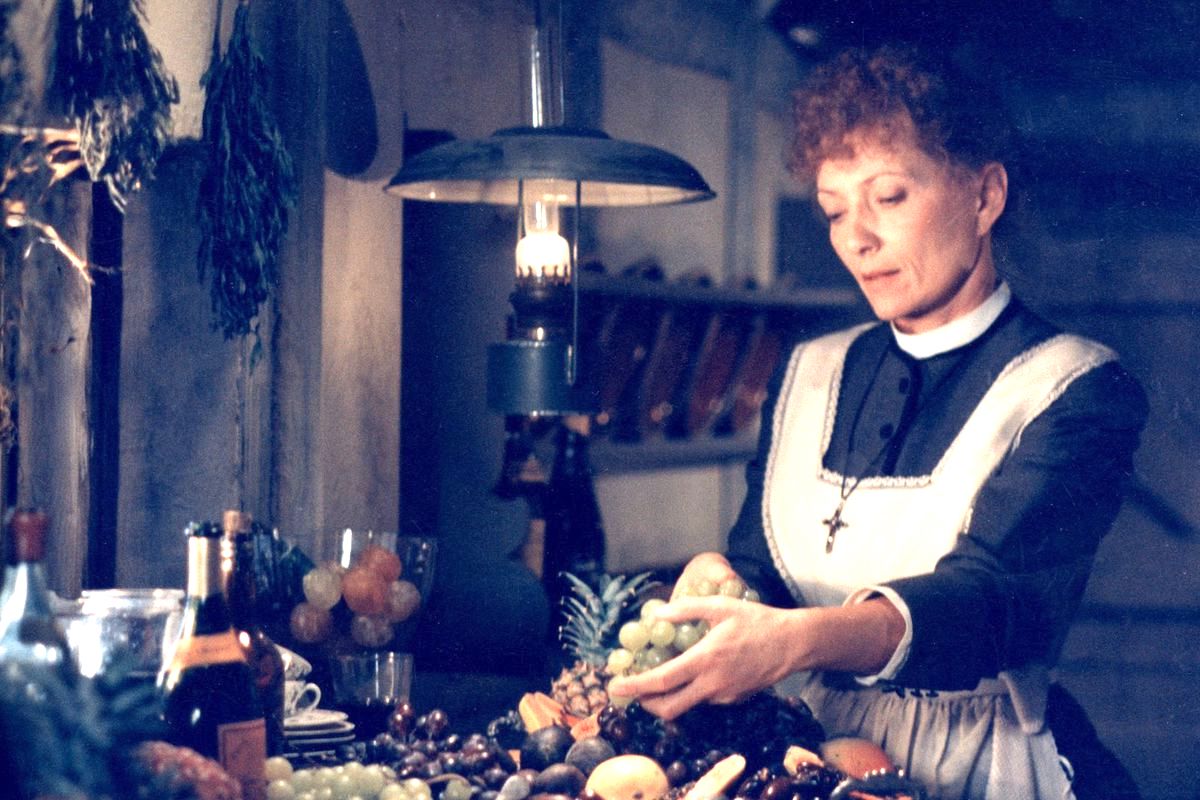
The Greatest Food Films Ever


Lust for life

(An incomplete essay)

Hard to make a case for films about food before the late '80s. There wasn't much of a movement to help stimulate craving other than the occasional cooking show on American public television (Food Network was only a glimmer of an idea in the horizon), and the handful that actually dealt with the subject weren't all appetizing. 

Thursday, February 09, 2023

The Menu (Mark Mylod, 2022)


A dish to die for

The Menu at least for the first half is nasty fun, served up in high style by Mark Mylod, from an idea by Will Tracy.

The story-- of a handful of guests sitting down for what promises to be the meal of their life-- sounds like The Most Dangerous Game retold as an episode of Chef's Table, and one of the better jokes has David Gelb recreating his dish presentations from the aforementioned Netflix series: the soft glamour lighting, the matte-black background, the labels that fade into one corner of the screen with a succinct description of the dish. The guests take a ferry ride (during which they're presented an oyster bite) to the world-famous Hawthorn, located on a private island. They're given a tour, emphasizing the locally farmed and foraged nature of the kitchen's ingredients, and you recognize the restaurant being parodied, Renz Redzepi's Noma, oft considered the greatest restaurant in the world

Monday, August 11, 2014

Vacation (The Sequel)

End of summer blues: posting an old 2011 piece on New York. Part one is here; the sequel is as follows:

My forays into New York aren't always about eating, and aren't always about film; sometimes I just want to re-visit locations that for me define the city, or at least define some of the most memorable ways man has put stone and steel to use. 

Take Grand Central Terminal, shown below:
The soaring ceiling, once looked overgrown with dark moss, is now a bright green, thanks to an extensive restoration job; the at one time dull-brass stars are now gleaming constellations (a little hi-tech help from LED bulbs)--you think of gold coins glittering from the bottom of an upturned aquarium. The brass four-faced clock perched atop the center ticketing booth, the sunlight streaming down from barred cathedral windows--this Church to the Railway Gods with its unceasing buzz (it houses forty-four platforms connected to sixty-seven tracks, the largest train station in the world) is a drama few filmmakers can resist shooting (it's one of the most common images of the city on film). Not everyone has managed to justify their use of it, though; some of the most memorable include Terry Gilliam's The Fisher King (which magically transformed Grand Central into a grand ballroom full of waltzing commuters) and maybe Brian De Palma's Carlito's Way (which turned the terminal's escalators and tunnels into playground setting for a deadly game of tag).

Sometimes I feel like something quieter:

The Cloisters in upper Manhattan seem like another world--you step out of the subway station, see a playground across the street, climb stone steps, find yourself in Fort Tryon Park. You take winding paths past flower beds and giant trees (surrounding rocky fort battlements with breathtaking views) to the highest elevation in the island, and finally to a monastic castle in part assembled from pieces of actual castles and monasteries, brought to the country stone by ancient stone. 

The museum has an extensive collection of Medieval art and crafts including intricate silver and gold pieces (a gold-plated salt cellar, an early silver-and-rock-crystal fork with an uncomfortable resemblance to a dagger); it has a garden planted and laid out exactly as in a monastery, with plenty of herbs and medicinal plants (monks were a practical people who expected long periods of isolation, if not outright siege); it has beautiful examples of stained glass (including grisaille and bright-colored windows, some of which contain unforgettably vivid shades of deep yellow); and playing cards, oblong shaped and intricately drawn and colored (reminding me of Tarot cards--and why not? One's fate or fortune, decided by a draw from the pack).

Some of the most memorable sights uptown aren't found inside The Cloisters, but here:

A view of the Hudson River and George Washington Bridge from Fort Tryon Park. I doubt if all the vegetation or forest is native to the area, but you do get some sense of what the island must have looked like before the settlers took over.

And sometimes the fascination doesn't involve an entire castle or river or park; sometimes it can be a detail as small as a subway sign--
--complete with Braille dots and mounted for some reason on cork. Possibly one of the oldest in the city? Possibly.

Calling Katz Deli an institution doesn't help, does it? Even if Katz is a repository of New York Jewish foodcraft and artifacts, it's hardly a museum--not when people throng inside actively interacting with and consuming said artifacts.


I've tried other delis; love the fatty tenderness of New York pastrami, the richness of their chopped liver. It's just that Katz's hand-slices the pastrami (meaning the meat is just that much thicker yet oh-so-tender, and the outside crust of peppercorns crumbles and falls between the slices), and the chopped liver has...something (Liver? Boiled egg? Schmaltz, or rendered chicken fat? A combination of the three?)...mixed into it that makes it that much sweeter. A varied plate of pickles, a bottle of Dr. Brown's Celery Tonic (the vegetable-y soda offsets the taste of deli flesh), a slice of cheesecake (thick and creamy and faintly flavored of vanilla) and yes, I can die a happy, happy man. 

And, yes, sometimes it isn't bad to spend a little money. We called M. Wells Diner, one of the hottest new restaurants in New York for a reservation.

"Ten o'clock?"

"It's the only one available."

"In the evening?"

"We'll call you back if anyone cancels."

In retrospect, I suppose we were lucky to get a reservation that same day. I remember listening to one man--he'd just finished dinner and was talking to the hostess--make a reservation for four in October. 

At around 9.30 we took the 7 train, stepped out at Hunter's Point, looked around--and we were there. An old building offered steak and seafood, all shuttered up, and right beside it was this tiny diner car, all gleaming stainless steel. Pushed in the diner doors and were told we were too early. 

So we sat outside, and waited. And waited. Ordered a lemonade, sipped it. Waited some more. Ten on the dot we stepped back inside, and no, the table still wasn't ready, so we waited at the entrance. 

Mind you, that's just the time aspect, which felt infinite; I haven't even begun mentioning space, which was anything but. The diner was tiny, about the size of a sardine can if you took out all the sardines. The booths were jammed with customers, the counter seats stuffed with customers; the only appreciable free space was behind the counter, and with all the waiters and cooks and hot appliances bubbling and hissing and running about I doubt if our presence would be appreciated there either. I wondered stupidly: why don't they move into the building next door if  they were so crowded? Knock out a wall, connect the two spaces, voila! Instant gratification. Wouldn't be the same, I suppose. A critic suggested the whole thing was 'performance art,' and I wouldn't be surprised; all that's missing is a gang of young actors hanging in a unisex restroom, lighting it up and talking about their next gig... 

We were finally seated, some half an hour later--and here I might as well present a bit of history and philosophy: M. Wells is the brainchild of Sarah Obraitis and her husband Hugue Dufour, formerly of the famed Au Pied de Cochon, in Montreal. Dufour cooks and decorates his little eatery according to the principles of what you might call 'casual minimalist.' Just click on his website above: all you get is a photo featuring their name, their hours, phone number, address, email address, and not much more.

Note that they're open for brunch, but not weekends; according to one article, they don't have the facilities to serve the 200 diners weekend service would involve. Ballsy statement, assuming two hundred people would want to come on a weekend to what looks like an industrial neighborhood, all shut warehouses and not much else beyond the Long Island Expressway roaring nearby.  That said, with this much crowd sitting and waiting to sit, you tend to believe them.

The menu was divided into small plates, big plates; we ordered four small, three big. The tomato tart was fresh tomatoes on nutty cheese on crackling crust--a perfect little pizza, only tastier. The Russian breakfast was blinis--crepelike pancakes--with caviar, creme fraiche, smoked sturgeon, simple and fresh. The lobster roll was chunks of lobster  in a perfectly toasted roll (the textures--chew of lobster, creaminess of brown butter (with a hit of tarragon), crispness of bread--played like a light melody on the tongue). The escargot and bone marrow with shallots and red wine puree, served on half of a shank bone, was a spectacle to both eye and mouth: toothsome mollusks in the richest meat butter in the world, substance and style in every bite. 

Big plates were exactly as advertised, really big food served in what I can only describe as ceramic tubs. This included roasted mackerel with fried gnocchi and ratatouille--not the little fish they stuff into cans; we had a huge slab of smoky fish draped into and barely fitting the little bathtub with firm, flaky flesh, the texture nicely offset by crisped gnocchi, the flavor by earthy vegetables. 

The saddle of lamb with tahini and pomegranate molasses (what on earth is a 'saddle?' The pelvis?) is amazing--each slice has a different texture and flavor, from dark, smoky crust to sweet and juicy pink to tender chewy translucent tendon. It's like the roast transforms with every tap of the knife, the trick performed against a backdrop of slightly bitter tahini (say the main ingredient aloud, and the cavern opens into a subterranean wonderland) and tangy-sweet molasses (for contrast, and Middle Eastern flair).

Then there's the BibiM Wells, their version of the classic Korean bibimbap. The bibimbap I ate in Jeonju was Korean comfort food, sliced-and-diced vegetables and shredded beef over broth-flavored rice, with a fried egg on top for richness. This version was a seafood bounty: razor clams, scallops, gravlax, accompanied by julienned vegetables and fried yam chips that I kept mistaking for crisped bacon (I was thinking all the while that it was an odd if welcome touch, the addition of pork to the dish), all over fluffy steamed rice. Instead of fried egg for richness, foie gras; to tie it all together is the mildly spicy sweetness of a maple chili sauce.

"How is it?" the waitress asked.

"This shouldn't work," I said. "Gravlax, clams, scallops and foie gras? It's crazy. It should never work. But it does."

The waitress didn't seem pleased. Maybe I was babbling; maybe I came across as thoroughly pissed. I meant well.

I suggested dessert, but everyone was stuffed; they wouldn't hear of it. I pointed out that the blueberry pie behind us, doing a good imitation of a manhole-sized disc of cracked asphalt, was constantly shrinking as waitress after waitress hacked off hunks for customers. C. replied that all he wanted was to get up and walk a little or he would burst, literally. I suggested the maple pie, or how about the Paris-Brest, "a kind of funnel cake?"  Everyone groaned in protest.

"Do waitresses get paid a lot?" La. asked.

"No, but add the tips and it's a decent wage. Why?"

"Because I'd like to work here someday."

Postscript: according to recent articles, M. Wells Diner will be closing down at the end of this month. Two thoughts come to my mind with the new: first, we were lucky to actually eat there, and second: that guy who made reservations for four in October--what's he going to do now?


8.21.11

Vacation (New York, 2011)


End of summer blues: a reposting of an old something I wrote about New York, back in 2011

So I took a week off and drove to New York. 

Wasn't my first time this year; I'd already gone for a weekend to help introduce a pair off films in a small Filipino film festival--

And on my way to said festival stepped out of the Times Square subway station smack dab in the middle of the above rally. Syrian Americans demonstrating--peacefully but loudly--for support of pro-democracy forces. One of the ladies were kind enough to let me pose holding a posterboard (of Bashir Al-Assad, and one of the civilians killed by bombings).


"New York? How expensive!" Sure, unless you do things a little different--like booking a hotel out in Flushing, Queens which, aside from being safe at two in the morning (step out of the subway and you'll swear you're in Hong Kong, Kowloon side) has some of the best Chinese food this side of, well, Hong Kong. 

Like the hand-pulled noodles in Golden Mall (41-28 Main Street, look carefully, it's easy to miss)--basically a building basement where the landlords have subdivided the floor space into tiny cubbyholes, and proprietors have set up folding tables and stools for people to sit. 

You walk up (not even sure which stall I ended up in; there was a lot of spillover business it was that crowded); you point out what you want (I could speak some Mandarin, but this was beyond my meager vocabulary); you crouch balancing precariously on a folding stool meant for a six-year-old. I should know; I kept casting a wary eye on one seven-year-old having trouble with his seat.

Then your order comes and it's worth the time and bother and cramped sauna conditions. The soup comes in what can basically be described as a wash basin; the noodles had been pulled just minutes ago (you have to twist and stretch your neck above the counter to catch a glimpse, but it's quite a show--a blob of dough flattened, stretched, magically divided by a few swift hand movements into guitar strings); the chunks of lamb meat are fat and tender and tendon-y. 

And the broth--thick, dark, deeply flavored by meat and green onion and god only knows what mysterious spices and herbs and essences go into this elixir (Is that anise I detect? Marrow distilled from shank bones, the richest, meatiest butter in the world?). Basically a little over five dollars for a bowl; worth it, if you don't count the bother of sharing your table with a half dozen other total strangers, and having to move out of the way every five minutes so delivery men shoving hand carts can whiz past you.

That's not the only cheap eats around. Not far from the corner of  Kissena Avenue and Main Street is a Vietnamese restaurant that serves excellent pho (broth, noodles, beef shank and tendons, some innards, and--love this part--the freshest cilantro, basil leaves, lime wedges and bean sprout toppings available). Outside this place--wouldn't know if they are affiliated or not--is a sidewalk grill that serves grilled tripe, stomach, cheeks, what have you on skewers.

In the city I always go to a sidewalk stand across the Toys 'R Us store in Times Square. Order the beef kebab, and specify medium rare; they will ask if you want the kebab salted (say 'yes,' otherwise it's too bland). They will ask if you want it on a hotdog bun--that's okay by me, who cares? It's in my opinion the best piece of grilled meat in the city, tender, smoky, hot; when you bite, the blood gushes out and soaks the hotdog bun, the kind of leftover treat a carnivore dreams of in his wettest fantasies.


We'd gone into Kebab Cafe (2512 Steinway Ave in Queens) years ago, sometime in 2007, if I remember right, a tiny nook that could sit twenty if everyone dieted a month and used plenty of Vaseline, decorated all over with mosaics and tiny lamps and drawings and photos and posters and other bric-a-brac. Ali the owner had been particularly taken with A., and called him "my man!" We'd always meant to come back, but never had the chance.

We returned this month; Ali took one look at us, one look at A. and said "A., my man!" C. asked: "you remember, after all those years?" Ali said: "how could I forget?" I whispered to Lu. "He's got quite a memory."

Had us seated; asked us what we wanted to drink (we asked for the pomegranate soda--basically soda water with pomegranate syrup, not too sweet--while A. asked for a Coke); told us he'll take care of the food. Started  the falafel mix, the baba ganoush, the hummus; formed the falafel balls with a pair of spoons, dropped them in hot oil. "I remember coming here years ago, because of that show by Bourdain," I said. Ali replied "Jamie Oliver visited too." "Oliver? Really? You're doing well, then." "Yes, but of course you people are much more important to me." Lu. leaned over to me and whispered "And he's still the flatterer."

I got up. "Where are you going?" "There's an ATM machine next door, right?" "Sit down, don't worry about that." Ali ordered. I sat down. He asked if C. wanted to learn how to cook; had him fan out slices of pear on a plate, then serve it to us: basically a mixed dish of baba ganoush, hummus and fava beans in lemon juice, with the sliced pear for picking up the thick dip and cleansing the palate.

Ali may have remembered A. but it was C. who asked all the (occasionally tactless) questions. At one point C. made an off-the-cuff remark about Egyptian culture, how primitive it must have been. I pointed out that Alexander the Great was inspired by Egyptian knowledge, that Imhotep possibly performed the first instance of brain surgery, that he was one of the first to use honey as a disinfectant because it was hygroscopic. Ali declared that "honey is an excellent preservative, and Imhotep is a genius for using it--but he is nothing compared to my man, Lapu-lapu!" He laid a plate of the fresh fried falafel before us, decorated with deep-fried bok choy.

When C. asked who Lapu-lapu was, Ali explained: "He was a Filipino who killed Ferdinand Magellan, the man who organized the first expedition to circle the world. The Europeans call him Magellan's killer but to Asians he's a freedom fighter, a hero." He put a plate of lamb cheeks before us, cracked an egg over it, and mixed it up with a spoon. It was terrific--rich and chewy and meaty all at the same time. 

He even had a moment for La. "Oh, she's texting. Most guys don't care; they text out in the open. But girls like to text under the table, as if it were a secret. She likes to keep secrets." 

Ali served us our final plate: fried cauliflower with pomegranate, the cauliflower coated with thick carmelized fruit sauce. We got up. "Next time I need to teach A. how to cook, it's his turn when you come back. And he should eat more--he's too skinny." Ali had lined up A., C., and even La. against the doorway leading to the bathroom, and marked their height. He said: "A., you better eat--I don't want to have you come back here shorter than when you came last."

It was--I don't know, extraordinarily leisurely and relaxed and, well, affectionate--old friends meeting again, almost. No; better--like spending an afternoon with an eccentric but dear, rarely seen uncle, who served us in his living room, stretching his arm out of his little kitchen to lay the dishes on the table. One of the best meals we ever had.

Monday, May 14, 2012

A mother's story


Florentina Borja, or 'Floring' as her friends and family called her, was born in Naga City on June 20, 1929. Her mother died when she was two, her father when she was twelve, during the Second World War. For a while she was raised by an aunt, who treated her badly, and refused to have her schooled. She had only finished grade six.

Before he died her father married her off against her will to a young man from a rich family--he felt there was no other choice, there had been stories of Japanese soldiers sexually assaulting and sometimes killing Filipino women. She had four boys by her arranged husband, the first at the age of fifteen. She thought him spineless, and too dependent on his family; after the war she left him with two of her elder children--she was forced to leave her two youngest behind--and traveled to Pasig City, where she got a job as a dressmaker. At the dressmaking store construction surveyor bought softdrink from her (they sold groceries as well) was and struck by her hazel-blue eyes and Spanish looks; she was impressed by his intelligence. They married in 1957.

She had five children by him; she lost the first two, fraternal twins, a girl and a boy. She raised the three by herself in Blumentritt, in old Manila, while her husband worked; later he started working overseas, in Guam and Hawaii, and she managed to invest his earnings in a piece of land, and eventually a house. She was ferocious, the way she guarded her children. She would guard her children outside the school they attended, spending the entire day there (sometime she would help out and volunteer as a substitute teacher). When a boy bullied her daughter T. in class, she waited till after classes for the boy, yanked at his sideburn, told him to stay away. Every time he would go to school she would warn him. He never bothered T.again.

She was extremely strict. She demanded that her children learn to clean house, do chores, buy and pick vegetables at the market (if the fish wasn't up to her standards, she would tell L.--the eldest--to go back; the vendors wouldn't argue because they were just as terrified of her).

She also loved them--hugged them, kissed them, teased them no end. She could be endlessly playful and would sing songs, and she had a lovely voice.

Even at the age of sixty-three she still had a lovely voice. I'd just met her, and she was a handsome woman with a wide smile by then. I'd fallen in love with L., and was visiting their house regularly. I never knew they were putting pressure on L., telling her I probably wasn't a good match--they were never anything less than warm to me. I don't think it was anything personal, just her in her mother hen role, guarding one of her children from some boy, the way she guarded them outside their school when they were young.

Things were different when I finally married L.--when I became part of the family, I found out what I'd been missing as a mere beau. We didn't have any place to stay, so she had us put up in a spare room in her house; we didn't have to worry about food, she cooked our dinner and breakfast.

Nanay Floring--I called her nanay (mama) by then--was from Bicol, and she cooked wonderful laing--taro leaves that she dried and cleaned and boiled herself to remove the irritants (a chore of several hours) then simmered with bits of fatty pork and chilies that L. and I (this was L's favorite dish) would spoon over steamed rice, a perfect reflection of her personality--naturally sweet, but fiery when aroused. 


I never felt that fire myself. When I married L. she treated me like a favorite son, kissing me and teasing me and tousling my hair ("You have such lovely hair! So soft, so fine--"). That surprised and flattered me no end. I never took care of my hair; would never comb it, or pamper it, and no one ever complimented me on it either. Was she just being affectionate or did she notice something no one else did? I don't know; all I know is that she loved my hair. 

I remember when a group of her friends had asked L. out for a date, a reunion of friends; she had told her parents and I that she would be home late. I couldn't help it; I was worried. I sat up in the living room and nanay sat up with me, fuming. When L. finally got home nanay was the first out the door, furious at L. L. felt embarrassed before her friends, but nanay didn't care; I was worried that L. wasn't home, and as far as nanay was concerned, I had every right to be worried.

I have to mention my favorite of her dishes--ginataang bulaklak at talbos ng kalabasa (squash flowers and sprouts in coconut milk). Bright orange squash flowers and the tenderest leaves and tendrils simmered in coconut milk, with chunks of glistening pork and small briny shrimp that brought out the sweetness of the milk, contrasted with the faint bitterness of the greens.If the way to a man's heart is through his stomach, she had me at the very first pressing of her coconut milk. If the best dishes are 'made with love,' hers are made distilled and pure--made with the fire and sweetness of her very soul.

I remember nanay meeting my own grandmother, and my grandmother taking a liking to her, which was, frankly, amazing--my grandmother was a very reserved, very quiet woman, and rarely liked anyone. To the end of her days she wanted to meet nanay again, and I often thought of arranging something--but my grandmother was bedridden by this time, and nanay had a hard time traveling (she had to stop cooking for us by then). I always regret not being able to bring them together again, at least one more time. 

I once remember arguing with L. over money matters--some of the worse arguments in a marriage are over money matters, and raising my voice. Nanay Floring was between us and in a way this concerned her too. She was upset, she had tears in her eyes, but not once--not for a second--did she raise her voice against me. L. was her daughter and she supported L., but I was her son, I could do no wrong in her eyes, and I imagine the conflict tore her up inside. I felt bad about it afterward--in many ways I felt as if I had taken advantage of someone helpless to resist me.

In 2003 L. and I moved to the United States. L. had gone ahead months before; I was waiting to join her. I paid a last visit to nanay; we talked, wondered when we might meet again, joked a little. She tousled my hair for the umpteenth time, for the umpteenth time told me how beautiful it was. For the umpteenth time I didn't know what she was talking about, for the umpteenth time I didn't care--her hand felt good on my hair. We hugged, and I left. I never saw her again.

On October 18 nanay had a stroke; she couldn't move or talk. The people caring for her said she had a sad look, as if she wanted to say something, but couldn't say it. It was her fifth stroke; the doctor said she should go home, there wasn't anything left to do, so on October 22 she did. Her husband and son--L.'s brother--took care of her the best they could. A week later she passed away; we learned the news over the phone.

L. of course was devastated--she owed everything to nanay. But the news hit me hard too. I regret not being able to see her again, hug her again, tell her how much I owed her, how much her cooking and caring and teasing and loving meant to me. I miss having her hand on my head, gently rubbing my hair. For some reason I've been keeping it short ever since--I don't feel as if I have to keep it long for anyone, not anymore. 

Oct. 29, 2010 

An adaptation of one of my favorite of her creations:

Ginataang talbos ng kalabasa (Squash fronds in coconut milk)

2 stalks of kalabasa (squash) fronds and flowers
5 ounces fresh shrimps, peeled and deveined
3 tablespoons bagoong (Filipino shrimp paste)
1 tablespoon patis (Filipino fish sauce)

1 cup kakang gata (first-pressed coconut milk)
1 cup gata (second-pressed coconut milk)
4 cloves garlic
2 pieces siling haba (finger chili, sliced if you want it hot)
1 medium onion or shallot
3 ounces liempo (pork belly, cubed)

Saute onion and garlic in cooking oil. Add liempo, saute some two minutes. Add bagoong, siling haba, and gata, cover and simmer for 5 minutes or until the vegetable is tender.


Add shrimp, squash fronds and kakang gata; season with patis, and pepper to taste. simmer for two minutes until the squash leaves are tender. Eat with steamed rice.

Saturday, February 06, 2010

Cloudy With a Chance of Meatballs (Phil Lord and Chris Miller, 2009)


A tasty little 'Meatball'

First-time filmmakers Phil Lord and Chris Miller's Cloudy With a Chance of Meatballs (2009) is a winning little morsel of a movie--sprinkled with topical references to junk food diets and overconsumption, lightly spiced with foodie satire, not too heavy on the moralizing.

It's based on the slim, 32-page children's book by Judi and Ron Barrett, which presents the kind of whimsical situation perfectly concocted to catch a child's attention: a town where food falls from the sky instead of rain or snow (never underestimate children's literature--children are the harshest of critics, extremely difficult to please; classics in the genre have a simplicity of appeal that is almost impossible to reproduce (see, for example, Spike Jonze's adaptation of Maurice Sendak's Where the Wild Things Are--a pleasing enough movie on its own, but not a true adaptation of Sendak)).

The Barett's book pretty much presents the situation as is, then proceeds from there in a series of richly detailed illustrations (hotdogs falling from the sky, for example, followed by a cloud of mustard and a drizzle of soda). Much of the appeal (aside from the basic premise and all the little details tucked away in the corners (the town is called Chewandswallow and its paper The Chewandswallow Digest)) comes from the matter-of-fact way the townspeople accept and even exploit the situation--always leaving home with fork and knife in hand (in case of sudden downpours), keeping umbrellas upside-down to catch a splash of orange juice.

Difficult sell; I can imagine the filmmakers reproducing the artwork and doing a slim thirty-minute short, at most (which I'd love to see, personally). To blow the book up to a more commercially viable running time of almost ninety minutes, they presumably had to add the backstory, involving a small town called Swallow Falls. The community has seen better days--its biggest company, the Baby Brent Sardine Company, has long since closed, and the economically depressed townspeople have been largely living on unsold cans of sardines ever since. Enter Flint Lockwood (Bill Hader), a wannabe inventor who means well but invariably creates technological disasters (but don't they all, at least in American animated movies?)--the town is still plagued by the flock of Ratbirds he once bred. Flint uses a machine, the Flint Lockwood Diatonic Super Mutating Dynamic Food Replicator (or FLDSMDFR for short) to mutate water molecules into food, draws on too much power, and sends the contraption rocketing into the sky, where it hovers among clouds and starts sending down cheeseburgers.

One wants to ask questions--how to 'mutate' a water molecule, for one, and what about the hygiene issues involving food falling on the ground, or left uneaten for days? And I'm tired of this longstanding disdain for canned sardines--if you're willing to expend the effort, Spanish and Portugese canned sardines are actually quite tasty; Italian ones best of all. Canned seafood from Galicia, in Barcelona, are so carefully crafted and prized a single can costs anything from twenty to seventy dollars (when you open a can of mussels, rich globules of fat float in the golden broth--the juices and oils have merged inside the can, and produced a taste rivaling that of fresh seafood). One can imagine the people of Swallow Falls abandoning their ugly canning factory and going into artisanal manufacture, selling their handmade canned sardines at thirty dollars a pop.

And here's where we entered, bookwise. The movie borrows some of its best ideas from the book--a steakhouse minus roof, where the diners wait for their orders to drop from above, for example. The movie can't quite replicate the wondrous image of a gigantic jello setting in the horizon, but it does turn said jello into a kind of playhouse Flint can romp in with his new date, Sam Sparks (Anna Faris), the pretty weather news intern who is reporting on the phenomenon--the animators really go to town with the idea of an elaborate jello mansion.

It's not earthshaking, consequential storytelling, and I like that. There's a message somewhere in here, about moderate eating and care of the environment , but we're not whacked over the head repeatedly with it. There's something about Flint's dad Tim Lockwood (James Caan), who can't seem to express any affection for his son--but the resolution to that potentially sticky subplot is relegated to a brief moment with a brain translator. Unlike, say, Brad Bird's Ratatouille, we are not slowed down by meaningful flashbacks, or attempts at serious drama; instead of half-hearted and rather idiotic attempts at fantasy (say, a rat guiding a cook's hand by tugging the hairs on his head), we go shamelessly whole hog (giant donuts crashing down from the sky and rolling across the town).

Plus, I like the sometimes horrific, sometimes sexual imagery--the giant meatball contains various suggestive orifices, killer roast chickens surround and threaten our hero, and the FLDSMDFR is imbedded in a mountain of pulsating, suppurating meat that calls to mind James Wood's gun-hand (not to mention pulsating belly opening) in David Cronenberg's Videodrome. Filmmakers Lord and Miller could have gone a lot further with this and I'd have loved it, but I suppose we have to make do with what we have, and call this a fairly satisfying meal.

First published in Businessworld, 1.28.10

Thursday, February 19, 2009

Best pig ever


Best pig ever

Well, it's official; Anthony Bourdain in his show and blog has said it: Filipino lechon is "the best pig ever.'

It's not as if we Filipinos need the affirmation--well, maybe we do. Travel shows don't usually showcase the Philippines (Bourdain and co-conspirator Andrew Zimmern excepted); Filipino chefs don't usually win Top Chef or become The Next Food Network Star, and I wonder if Samantha Brown will ever grace a Filipino beach with her bare suntanned foot. The Philippines is probably Southeast Asia's best-kept culinary secret, with travel bloggers and travel books pooh-poohing our food for being blander and less spicy than our Thai neighbors (Bourdain to his credit upon hearing this opinion in the show immediately dismissed it: "no, it isn't that," he says brusquely).

So if some gangly white man with a popular travel show and rep of straight-shooting no-nonsense street smarts flies in and declares our roast meat the best he's ever tasted, yes I can see where our reaction can be a little, uh, enthusiastic (see Bourdain's Hierarchy of Pork, and the almost four hundred (as of this writing) comments that follow, or see Marketman's (pseudonym of one of the show's purveyors) posting of the No Reservations Lechon Lunch (which includes an ingredients list of the various pigs roasted, both the classic Cebu lechon and the Marketman variation) with its hundred-plus reactions (including a dissenting one warning that Bourdain will never come back to the Philippines, ever).

I did offer my opinion that any disappointment Bourdain may have felt about his Philippine visit, or dampening of spirit felt due to Augusto's (his erstwhile host) lack of energy and initiative, is, while not exactly feigned, probably pointed up in the editing room during postproduction. I've watched enough episodes of the show to notice that Bourdain likes to have a through-story, a kind of premise on which to hang the show on, and the apparent premise he'd hit upon on this installment goes something like: "Bourdain takes naive Augusto, who apparently doesn't have a clue about his parents' culture and feels left out, and reintroduces him to said culture, through the medium of roast pork (hell, the previews practically spelled it out for us). Nicely different take for the show (Bourdain saves Filipino from himself!), nice way of turning apparent handicap into virtue (no bar scenes, which may mean the Filipinos failed to take the hint from past episodes and introduce Bourdain to the joys of lambanog, basi, or tapuy--meaning in a sense the Filipino hosts did screw up big time (or was Bourdain watching his alcohol? He quit smoking recently)), nice way to showcase Bourdain's softer, more paternal side (white man good guy). 

All snarking (who said Bourdain had a monopoly?) aside, the man does know his pork. As he's said in practically every episode, he loves pig, and he's declared this or that variation of the meat good, better, great, or forgettable. And he seems impressed enough to say Filipino lechon is the best not once but twice, and follow it up with a clear ranking in his blog. Cynical as I may be, I'm not one to look down on another cynic's repeated praise; thank you sir, for the compliment.

(Can't help but go into a lengthy aside about my own experience with lechon Cebu--a friend Iris who worked for a Cebu resort invited the family over, and generously had us installed in one of the huts facing the sea. We just had to walk right out our door, and the ocean was about fifty paces away.

Beautiful place, with a shark pool in the front lobby (I remember standing at one end, marveling at some of the larger fish, only to turn and discover that one of my young 'uns had been standing at the other end, dipping his hand in the water). The seaside restaurant--literally, a grill place where you sat at the end of a jetty, over the water, as you ate--served a hot, briny and gingery Manila clam soup, and live lobster sashimi. Basically the chef plucked a large lobster out of his fishtank, bisected the tail with his sharp chef's knife, chopped the meat into large chunks and served it, still quivering, on a plate. It was unbelievably sweet.

The next day we went boating, and on one mid-ocean stop one of our guides dived for sea urchins. He surfaced with a bagful, which he banged against the boat's hull--to remove most of the spines--used a pair of scissors to snip the uni open, plopped the pale orange flesh onto our hands, and had us pop it in our mouths. The lobster was sweet, but this was rich, like briny butter, with a distinctly creamy texture. I felt this thrill emanate from the center of my forehead all the way down to my belly, it was so good.

We finally ate at Iris' home, and she topped the whole visit with an entire lechon Cebu, ordered and delivered to her home. Crisp crackling, with just the slightest hint of fat (like the world's richest sandwich spread, on a slice of porky toast), and the flesh around the ribs had the flavor of sea salt and lemongrass. We talked about that meal--about Cebu--for years afterward; still do nowadays. Actually, we talked about the lobster, uni and pig just a few nights ago, just after the Bourdain episode.)

A few complaints I had about the show (to be fair, Bourdain himself professed nervousness about trying to do justice to the cuisine of seven thousand islands). He didn't nibble on a balut, at least not in the show. He wasn't impressed by the pancit palabok (to be fair, maybe it wasn't a good sample).

He liked the pakbet, but if I were helping with the show (ha!), I'd have asked our manang, who comes from the Ilocos region to help prepare it. That was a Tagalog pakbet in the show, hardly the real thing at all, or hardly the most flavorsome version. An Ilocano pakbet would be cooked in a palayok (an earthenware pot), would feature the small Ilocano eggplant (about the size of a large egg), the small ampalaya (bitter gourd), sitaw (string beans), patani (a pale white Lima bean), small tomatoes, okra, ginger. The vegetables are not cut up, but tossed whole in the palayok to stew with fish bagoong (fermented fish paste) and--glorious of all glories--that decadent deep-fried pork product called bagnet, which is to chicharon (fried pork skin) what Bruce Banner is to The Incredible Hulk (bagnet is basically pork belly fried till it's crispy hard; for a detailed description of the meat and how to cook it, check this out). The result is an eye-rolling, sigh-inducing stew of pork-and-fish flavored vegetables, in a thick and incredibly flavorsome broth.

Then there's the bulalo, boiled beef soup and shank bones. Bourdain to his credit knows enough to suck out the bone marrow, but as I explained in this blog post, sipping the marrow without using patis (fermented fish sauce) is like enjoying the beef, the very essence of beef (as Zimmern likes to say, "fat is flavor") without adding the poetry, the briny sweetness that helps the beefiness take flight.

Finally, and this is possibly the saddest omission of all, Bourdain failed to partake of agus-us. I first heard of this possibly mythological delicacy years ago, from Ed Alegre's column in Businessworld. The article described various Filipino bar chow, including kaldereta (probably named after its cooking vessel, a Filipinized caldero, or large cooking pot), the best version of which features goat meat, the kaldaretang ulo ng kambing (stewed goat's head) being the best of the best with its tender, flavorful tongue, its pair of fatty eyeballs, its soft, cheesy brain tucked away like an oversized gold nugget within the skull. Plenty of crushed garlic as thickener ("which is why it's so expensive," I remember Ed writing), and whole sweet pickle, not relish ("so you can take it out and pop it in your mouth," Ed writes) as--well, I'm just not sure what it was for (flavoring or souring agent?), only that it tasted good.

Haven't found that article, may never will, but I did find an earlier version where he mentions all kinds of bizarre bar chow, and it makes for a fascinating read. Like his description of dinubok: "Take a big fish, preferably one that's fat....wrap as it is in plastic and let to hang for 4 days to a week. Unwrap. Remove its innards. Wash clean. Slice. Wrap in kolis leaf. Inun-un (paksiw (a kind of stewing)) in salt, garlic, ginger, palm vinegar, vetsin. Ampalaya is optional. Or cook linarang-style."

Agus-us is mentioned near the end of the piece. It's a conversation with Loyong, the brother of Raymond Fernandez, a professor in the College of Fine Arts University of the Philippines Cebu. Raymond come from Dumanjug, a coastal town in Cebu.

"'It's tuba (palm wine) country,' he says. 'All our sumsuman (bar chow) goes well with tuba.

"'Dalupapa is cuttlefish which has to be marinated in toyo (soy sauce) for one hour; otherwise it would be very tough. We cook it slowly, five minutes on each side. Fried or broiled. If it is overcooked it is too tough to bite. And we use only the body.

"'Then there's lumayagan, which is a small squid, or cuttlefish perhaps. Two inches to a foot long. This we fry with very little palm vinegar and salt. It cooks in its own black sauce. We do not take out the entrails. That is what makes it delicious, the taste of entrails. It is especially delicious if it has bihud (squid roe).

"'The rarest is agus-us. We mix boiled kamote (sweet potato tops) and raw pork. We let it hang for a few months. When worms start to appear that's the time to eat it. Very good as sumsuman. I remember the Camayos of Hinatuan, Surigao del Sur, who wrap the newly caught wild boar in anahaw leaves and keep it hanging until worms come out--that's the sign that its ready for eating.'

"'Masarap (delicious)?'

"'Nothing like it,' Loyong asserts with finality."

This was to be a celebration of Filipino cuisine in all its varied glory, which made it all the more startling when, googling around, I discovered that Edilberto Alegre, columnist and writer and champion of Philippine culture and its cuisine, died a little over a month ago. I read his column many times back when I was working at a bank, and copies of Businessworld were available outside of any vice president's office, or on the secretary's desk; even met him years back--once, maybe a few times. I don't dare profess to know him to any great extent, which makes it a bit of a mystery, why belated news of his passing should hit me so hard.

I do agree with his primary argument: Filipino culture is not damaged goods. It takes its influences, from Spain, from the United States, from China, and makes them its own. It's a thesis Alegre has been supporting for as long as I remember reading him, and it's one under which I operate (a common-sense attitude, really--"I'm basically okay, and what I do with what I'm exposed to (American TV, movies, books) is Filipino adaptability working at its inventive best").

I remember our last conversation. I'd asked him about agus-us. "How on Earth could you justify eating something full of maggots like that?"

"I asked Loyong about it. His reply was 'But it's exactly then that it's safe to eat.' When they disappear, then you know it's gone past rotten to being too poisonous, even for maggots."

"So what does it taste like?"

"Like soft, ripened cheese. Like nothing on earth."

Till we meet again, Ed. 

2.19.09 

Monday, February 16, 2009

No Reservations: Philippines (Monday 10 pm Eastern, Travel Channel)

Next on No Reservations: Philippines

Yes, my home country.

I love the show, arguably the roughly three or four hours of non-film television I ever bother to watch on a weekly regular basis (I'm not the only one, apparently--Samantha Brown's manicured guided tours of Europe have been bumped out by Bourdain (and his co-conspirator Andrew Zimmern) to a Saturday time slot, practically a graveyard for ailing travel shows). I don't know what it is about the show, the mix of attitude and a philosophy, the restless hunger, the need to seek out new cultures and foods, to try keep an open mind to all cultures (or go down swinging) to contemptously urinate on the tried and touristy, except (as in the Singapore episode) when the food is that good.

I mean--take his previous episode, on food porn. Basically blows away Zimmern's rival episode exploring the link on food and sex, and here's why---Zimmern's episode actually tries to explore said link, and at best the link's tenuous; upshot of the episode is that the best aphrodisiac is the one one believes is the best aphrodisiac (the placebo effect, in effect).

Bourdain's episode is cruder, more straightforward: he just stitched together money shots of extravagantly rich and sensuous foods being prepared and eaten (there's some thesis connecting food television to the '70s porn industry being put forth, but the treatment is not too serious, nor no doubt was it meant to be). Eric Ripert prepares angel hair pasta with a buttery foie gras sauce and osetra caviar; Terrance Brennan slaps together a meat (braised ribs)-and-cheese grilled sandwich to die for; David Chang creates a Bo ssam--a 10-pound pork butt, slow-roasted in molasses, green chilies, and Korean soybean paste, served with a dozen oysters, and kimchi, and rice; Martin Picard's staff at Au Pied de Cochon prepares every part of the pig--from the head meat to the deboned and richly stuffed foot to the deep-fried tail--sautes them in pork broth and butter, tops the various parts with generous chunks of foie gras and cream, assembles the deliciously mutated monstrosity on a gigantic wooden board, sits down at the table, takes off their clothes (at least the upper garments) and eats.

Now that's naughty.

So what to expect from the Philippine episode? Lechon de leche, of course. Don't know if he'll prefer it to his current favorite, Indonesian pig (where the skin is basted with coconut water, to make it carmelized and crisp). Adobo; durian; fresh fish of all kinds; balut; pinapaitan. If he's really as hard-core as he likes to think he is, he'll try agus-us, a pork product I'd once read about from Edilberto Alegre that even Zimmern might hesitate to try.

We'll see. I'll watch the episode, see what happens, hopefully write about it sometime this week.

Thursday, March 27, 2008

Bone marrow soup and steamed rice


A bowl of boiled beauty


Anthony Bourdain's death-row meal--in effect, what he would like to eat if he was going to be fried by two thousand volts the very next day--is roasted bone marrow with parsley salad.

I've tried
cooking that meal myself, and it's very good, very rich. But I've just realized that I've eaten--have been eating, for years--something even better.

In other words,
bulalo, or boiled beef shank with bone marrow. The recipe linked here is one I'm familiar with, only with a helluva lot more peppercorns. Not just the shank, which when boiled properly is full of tender meat and softened tendons and cartilage, but tail and neck bones as well.

The result--well, admittedly roasting the bones gives them a unique flavor, but boiling them to make a rich broth spooned over steamed rice (as opposed to spreading the marrow on toasted bread) is another thing entirely. Far more homey, I think, and comforting (and wonderful in the winter cold). True there's the former's contrast of textures--marrow on crisp toast--but that unctuous fat spread over pillowy rice (appreciated especially if your teeth aren't as firm as they used to be) flavored with simmering soup is, I submit, an equally complex (and arguably subtler--you get different shades of softness) symphony for tongue and teeth.

And while roasted bone marrow has been accursed with the
patina of fine dining, bulalo is still pretty much a home-cooked meal, at most a lunch-counter meal. I remember going out on client calls to the province of Batangas, with officers from the Development Bank of the Philippines in tow. I particularly remember Vivian and Liza (poor Liza, who has since passed away, was always game to try something) asking to stop for lunch, the corporate van parked before an eatery with wraparound wire-netting windows and a creaking screen door (spring loaded, of course, to keep the door closed and horseflies out). We stepped out of the van into the broiling heat (being noon and the south of Luzon, it was easily ninety Fahrenheit in the shade), walked into a crowded lunchroom with concrete floor, picnic-table benches, wooshing ceiling fans overhead, picked up our orders at the long canteen-style counter (servers with great ladles splashing hot soups into bowls; tongs deftly picking out one's choice of vegetables, meats, bones; cups scooping out rice from huge pots to be emptied, upside-down, into plates).

I'd learned much later that Vivian and Liza had been horrified--such a common, low-class place for us to eat! But I loved it; I loved the cheap prices, the workingman atmosphere, the no-nonsense efficiency. And I like to think that, despite the ambience (or utter lack of), the two really enjoyed the food (I remember Vivian--or was it Liza?--wrinkling her nose and saying "it wasn't very hygienic--you can see the cooks' sweat dripping into the broth." To which I replied: "but that's part of the flavor!"). At the very least, they must have appreciated my company.

Memories like that and, further back, of myself as a child eating bulalo, can't help but rise up steaming (like the cliché of ghostly apparitions, only with a distinctly beefy aroma) from the bowl in front of me. I like to eat the pechay (Chinese cabbage) first, as a way to assuage my guilt at such a sinful indulgence (although pechay with rice and hot soup--the bitter leaves crunchy, the soft starch soaking up the meaty juices--is in itself a wondrous thing). I use a knife to worry out the marrow (sometimes I use a chopstick, though my favorite method bone structure allowing is to press one end to my lips and just blow the stuff--like snot--out the other end), which would lie like deep-gold butter (with flecks of brown meat) on top of the rice, trembling; my hands would tremble too, almost as if in sympathetic reaction.

And then--the secret, the glory of bulalo: the patis, or fish sauce. English roasted marrows are traditionally seasoned with salt--sea salt, if you like--but that is a poor substitute for this divine, dark-brown elixir dripped from unsteady spoon over rice, fat, everything. It's as if, having decided to excavate the heart, the very essence of beef flavor, you recklessly throw in the briny sweetness (oh so slightly corrupted by aging) of the sea. Surf and turf, fermented and fresh, raised to the level of countryside poetry.

Bourdain can keep his death-row meal and my earlier self can go stuff himself with parsley salad for all I care; a death row dish--a dish so beloved you would choose it for your last night on Earth--needn't be anything read from a book or seen on a TV show or downloaded from the internet; sometimes it can be as simple as what your grandmother cooked when you were a child, or ordered at a lunch counter, or ate at home, remembering, in the dead of winter.

Friday, March 14, 2008

The most delicious banana in the world


Bought a copy of Dave Koeppel's Bananas: The Fate of the Fruit that Changed the World on the strength of a recent interview he did on NPR; I don't think I'm going to regret the purchase.

The fruit is fascinating not just for its nutritional properties (it rarely if ever causes allergic reactions, is easily digestible even by babies, provides a quick burst of energy, a safe source of fiber, is rich with among others vitamins C, B6, a protein that includes three essential amino acids (combined with milk the fruit is almost a nutritionally complete diet), and potassium, a crucial element for muscular efficiency) but for the way it's cultivated (bananas sold in the United States are genetically descended from a single fruit tree variety (actually a very tall herb) called the Cavendish), distributed and marketed as America's (and the world's) most popular fruit--and the story of how it came to be that way, thanks to the efforts of Chiquita Brands International, formerly the United Fruit Company.

The company's achievements are all the more impressive considering that the banana at the turn of the century was virtually unknown to Americans, and that the most popular fruit at the time, the apple, was local produce while the banana had to be imported from South America. United Fruit's solution was to grow the fruit cheaply, so cheaply that the company has played an active role in the history of South America, and not always in a morally admirable way (basically it paid slave wages to banana growers, and kept those wages low by installing and maintaining repressive regimes).

Perhaps one of the most blatant examples of the United Fruit's machinations was the ouster of Jacobo Arbenz Guzman from Guatemala in 1954. Having ascended to power as president in one of the country's earliest democratic elections, Arbenz proposed land reform; United Fruit, the single biggest owner of unused land in Guatemala, was so unhappy it stage-managed (with the help of among others the CIA and even The New York Times) his overthrow. Under threat of invasion by the American military Arbenz resigned, and was stripped to his underwear in front of members of the press before being allowed to board a plane to Mexico.

Perhaps the most appalling single episode involving United Fruit, however indirectly, was what happened in 1929 in the town of Cienaga, in Colombia. Some months before thirty-two thousand United Fruit subcontractors (they weren't considered proper employees, to help keep wages and health benefits low) went on strike, and thanks to corporate pressure the Colombian government declared a nationwide martial law.

The very next day, a Sunday, people came out of church after hearing mass and assembled in the town square, waiting to listen to a speech from a regional politician; a general--presumably trying to prevent military intervention from the United States--ordered four machine guns positioned high around the square to fire at the men, women, and children below. Ambassador Caffery later wrote Washington that he had "the honor to report...that the total number of strikers killed by the Colombian mlitary exceeded one thousand." Nobel Prize winning novelist Gabriel Garcia Marquez would decades later incorporate this episode (with little embellishment, far as I can see) into his best-known work, Cien anos de soledad (One Hundred Years of Solitude 1967)

That was decades ago, one might say; besides, United Fruit has since lost power and morphed into the more innocuous-sounding Chiquita Brands International. True enough, only just last year the company was fined $25 million for giving over a million dollars to a Colombian terrorist group.

On the flip (and somewhat lighter) side there's a story of how United Fruit developed ways of promoting the banana, including jingles, a corporate logo based on movie star Carmen Miranda, and the idea of eating it with milk and cereal; at one point Kellogg's provided a coupon inside their cereal boxes redeemable for free bananas to be sliced into the cereal, and such was United Fruit's power that it had Kellogg's pay for the bananas.

Then there was the problem of marketing such a sexually suggestive fruit. United Fruit's solution to selling such a phallic product to squeamish women was to depict conservative young girls eating the fruit always with the skin half-peeled. With the banana constantly surrounded by a skirt of its own tough skin, it looked considerably less, well, threatening...

Perhaps one of the book's most fascinating accounts is of how the Cavendish--a by most reports bland and fragile fruit--replaced the Gros Michel as the United State's banana of choice, not because it was better (the Gros Michel (Big Mike) was sweeter, tougher) but because the Gros Michel was being wiped out by a fungus; the Panama disease, it was called, because it first started in Panama. Ironically, the same disease is striking the Cavendish now (apparently the Cavendish was immune to only one strain of the disease), and is about ready to wipe the fruit off the face of the planet.

But easily the most interesting part of the book for me was Mr. Koeppel's account of the different, delicious varietes of bananas found all over the world, and top of his list was the humble lacatan (see photo above), a Filipino banana that the writer describes as having flesh "the color of creme brulee," and a taste that is "lush and full-bodied, with an intense flavor that recalls homemade banana ice cream." Jon Verdick, who runs a San Diego nursery for exotic fruits, calls it "true nobility among bananas;" in fact, Koeppel continues, "the only problem with eating this regal banana is that afterwards you may feel--as I now do--condemned to living in a world turned drab when you bite into an ordinary Cavendish."

Flattering words to read, of course, and not a little embarrassing. Truth to tell, I've taken the banana for granted all my life. I could find the lacatan everywhere, in grocery stores, at street corner vendors, growing along the sidewalk, for God's sake! We even had a lacatan tree sprouting in our back yard--and I'm ashamed to say I've never bothered to reach up and just pick one. I've always preferred something juicier--the tart lanzones, the sweetly grainy atis, the incomparable mango (that fibrous fruit found in American grocery shelves--it's okay, but the difference is as if between night and day) among many, many others. Even among bananas, I preferred the tarter, paler-fleshed latundan, or the far smaller, extremely sweet senorita; I never considered eating the lacatan a particularly special experience.

Now I'm more than a little curious; I'd love to taste a lacatan again, if only to find out what I've so idiotically missed all my life. I keep wondering about the fruit--was its flesh really the color of creme brulee?--and when I might be able to go back and try it again. I suppose it's just one more regret meant to haunt me for the rest of my life, about the country I left behind...

3.14.08

Wednesday, December 26, 2007

'Tis the season


'Tis the season to overindulge--in my neck of the woods, to stuff one's self full of baked goods. I'd pretty much had them all: fudgy, green-icinged, candy-sprinkled, oatmealed-and-raisined, you name it. I've had lemon coolers and Russian Tea Cookies; I've had horrifying monstrosities of an unappetizingly green hue that resembled something from a short story by Isaac Asimov (strangely enough the creatures--actually marshmallow-and-cornflake treats that for some reason had been dyed a bright lime green--were rather appetizing). Terry--not my wife or girlfriend, just my housemate (don't ask, it's complicated)--was doing a batch for her sister; some days earlier, the sister had been wondering what to do for the cookie exchange she had agreed to join (apparently in this part of rural America such exchanges are common); I suggested lengua de gato, a crisp little treat I used to love as a child. "Everyone and their sister will be baking chocolate chip cookies--maybe oatmeal, if they're imaginative," I said. "Lengua de gato would be something they'd never seen before."

It was not to be, but we did get a box full of other people's produce out of it (one of which is the aforementioned shapeless, green-tinted treat), and a large tupperware full of Terry's leftover cookies: simple chocolate chip, oatmeal, and (simplest of all) sugar cookies that were nice and crisp--almost like a lengua. Call it consuelo de bobo (rough translation: moron's consolation), but I was happy with what I had.

Have to admit, I went totally nuts this year, and I don't mean just cookies. Went to a wine shop to buy a red (for my spaghetti sauces), a bottle of Marsala (for cream sauces and desserts), and a gift for Terry's sister's friend when I looked up at the shelf behind the cash register and spotted a familiar label. "Is that Dom Perignon?" I asked. "Yes," said the cashier." "How much?" "A hundred and forty nine dollars." "Well," I said, after picking my jaw up off the floor, "that's about the size of our holiday dinner budget, I suppose," and found myself for some weird reason actually reaching for my wallet. Before I realized what had happened, I found myself sitting in the car with not three but four bottles clinking away in the rear seat.

A few nights later, I was wondering what would go well with that bottle of Dom--cheese? Strawberries? Not bad choices, but I stumbled upon this website, and couldn't help clicking on a few links--whole duck liver: seventy-one dollars. Not that I had seventy dollars lying about to spend on just anything I wanted (and with overnight shipping--a must, considering the item--the grand total was a clean hundred dollars), but a) it's Christmas, and b) for once I could actually afford to buy it without worrying about my electricty getting cut off (again, don't ask). Reason 'a' wasn't all that simple a reason; I loathe Christmas and could care less about celebrating the damned thing...but I've spent too many years (the last five to ten, in fact) under a tight financial leash and a self-pitying funk during the holidays and thought: what the hell--if I'm expected to indulge, I might as well go all the way. I was a weak and unprincipled sinner all last week, you betcha.

The liver arrived exactly five days later (three days for processing then overnight delivery), in a styro box, sitting on cold packs; beside the pale creamy lobes was a pair of duck breasts. I suppose I should be grateful, though I don't remember breasts ever being mentioned in my order form--but never mind; they were a bother and a distraction, but I might as well use 'em. If no one at the dinner table wanted to actually try medium-rare duck liver, the breasts might actually come in handy as some kind of backup dish.

The night before Christmas I was struggling to make a fruit compote--for the liver of course (I hadn't even begun to think about the duck breast); the Dom was chilling away in the fridge. I'd downloaded a recipe, was about to pour my just-bought bottle of Marala into a bowl full of sugar and chopped fruit (peaches, pears, plums, strawberries, dried apricots, dried figs, candied ginger, mint sprigs), when I realized that the recipe called for Madeira wine. Should I just use what I bought? I don't know Marsala from Madeira from manure, which was kind of the point--I didn't feel confident enough to try a substitution. So I sent Terry out to buy a bottle which she did (patient and angelic temperament that she had); the whole watery mess went into a large gallon bowl, which in turn went into a fridge.

Terry stood behind me while I was pouring. "What's all that for?" "Oh, just a compote for the duck liver." "You're going through all that trouble just for liver?" "It's very special liver. It cost seventy dollars, plus a pair of duck breasts." That shut her up for a moment, out of sheer astonishment. "Well," she said, "I was thinking of making my egg rolls too." "Sure, why don't you do that? Just in case."

D-day dawned, and my compote was mixed one more time in early morning (I'd been mixing it every few hours the previous night). I'd also dug up an easy duck breast recipe involving dried cherry sauce, only I didn't have any dried cherries--searched high and low, nope, nothing. Was acutely aware that not a single store was open this Christmas day (actualy I also had a problem with the toasted bread that was supposed to go with the duck liver--but that was a whole other issue).

Took out my 12-inch nonstick, put the breasts in it scored-skin down for four minutes; turned them over, did it again for another four minutes, then transferred the breasts into a baking dish to finish in the oven at 400 degrees for ten minutes. In the nonstick pan tossed in the 'cherry sauce'--half a cup of red wine, half a cup of chicken broth, a tablespoon of vinegar, a tablespoon of sugar, salt and pepper, and instead of cherries I threw in the half cup of craisins (dried cranberries) I found hiding in someone's ziploc snack bag, reduce for eight minutes; add two tablespoons of butter to finish.

Then the scary part: with a knife kept continually moist by dipping it in running water, I cut roughly half-inch slices from the duck liver (had to be careful to keep it from breaking apart); added butter to a medium high pan (which immediately started smoking, setting off alarms), and as quickly added the duck liver. Counted to sixty, gingerly lifted the browned slices off the pan and into a serving plate--and came away with roughly eight beautifully browned (only on one side) medallions of pan-seared foie gras, one of the most luxurious foods in the world.

Laid a foie gras on one side of a plate, spooned fruit compote at the liver's one end, garnished with a mint sprig; laid a duck breast on the other side of the plate, spooned craisin sauce at the breast's other end, and yelled "COME AN' GIT IT, 'FORE I THROW IT OUT!" Each plate came with a glass of Dom Perignon.

The medallions were crispy brown one side, unbelievably creamy the other; the sweet, tart compote crunchy with fresh fruit cut through the richness nicely. The duck breast had crisped skin and a red, rare meat, and the craisin sauce complemented that perfectly, too. The Dom was dry and cold, and washed down all that decadence nicely.

Only there was something missing...the texture was there, but the flavor was lacking somehow. It was when I bit into the duck breast, feeling the crunch! of skin against teeth and the skin's strong flavor that I realized what I'd forgotten to do, the most basic step of all: add salt and pepper before you cook the meat.

"Holy--" I ran to the serving dish, sprinkled salt and pepper on the slices; put salt out on the table for everyone to use. But it was too late; the damned hundred dollar's worth of breast and liver was tastewise flat as pancakes. Hundred dollar pancakes, in effect.

Oh, I'd salvaged something from the experience--Picked up two leftover slices of foie gras, salt-and-peppered the uncooked side, seared them for a minute, then invited everyone to taste. Oohhs, and ahhs all around, this time sincere; they finally realized what it was all about. Ah, well. Maybe next year I can afford to do this again--do it right.

Just before I went to sleep some time after midnight, I felt a hankering for something to eat before I turned in. Not foie gras--that was all gone; not duck breast--that was much too rich. Something simple and homely and good.

I noticed Terry's egg rolls, sitting cold on a plate. I picked one up, dipped it in its vinegar and crushed garlic sauce, bit. The flavor of ground pork, chicken and shrimp flooded my mouth, the sweetness of pork and shrimp sharpened by the hint of soy, sesame oil, scallion, coriander leaf; and I could feel the crunch of the wonton wrapper, the crispness of the chopped water chestnuts. Not fancy, not expensive--just time-consuming and painstakingly difficult to make, a real labor of love, and the single best piece of food I tasted that night.