Counting down, the in my book best films of 2013:
Not
a big fan of the distortion effect used around the edges of the frame
in the exterior scenes (Gerardo de Leon did the same thing in his
Banawe,
and it felt and still is a silly gimmick that obscures otherwise
gorgeous images) but Carlos Reygadas' semi-autobiographical film told
in the style of Luis Bunuel with a generous helping of David Lynch is
a fascinating anti-narrative. It does speak of patriarchal anger and
spousal passivity and how one enables the other (demonstrated in an
erotic interlude that takes place in a sauna, where the rooms are
named after artists and philosophers) and of children's dreams
portending quiet apocalypses (cows surround a little girl, lowing;
the sky literally rains blood) but to pin Reygadas' work down to
anything more definite is to risk looking silly, even wrong; this is
a Rorschach blot of a film that you interpret at your peril.
No
one loves a film more than a cinephile, and few love Philippine
cinema more, apparently, than Andrew Leavold, owner of the late Trash
Video (it's closed since), an Australian specialty store that traded
in cult and bizarre titles. Leavold called his establishment 'Trash,'
but that's to entice his customers; it's clear from his debut
documentary that he really means 'treasure,' and he treasures few
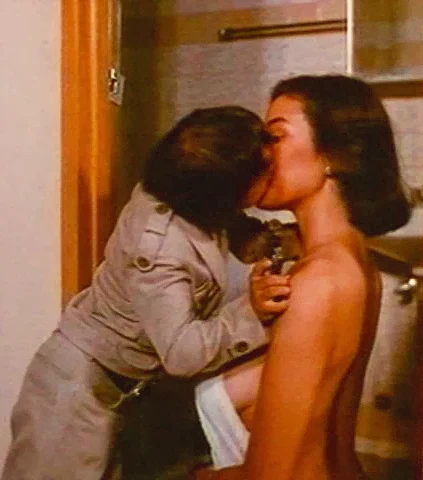
films as he does Eddie Nicart's For
Y'ur Height Only (1981),
featuring the one and only Weng Weng, a 2' 9” actor reportedly
named after a Filipino drink--so much so Leavold spent seven years to
bring his film to the (big, small, video) screen.
Mind
you, For Y'ur Height
Only isn't in the
tradition of Lino Brocka or Ishmael Bernal; the movie was meant to
parody the James Bond flicks and was produced on a budget tinier than
its diminutive star. But what Leavold reveals in his prodigiously
affectionate piece of cinejournalism is that there are arcane
pleasures to be found in this more disreputable branch of Philippine
cinema (among others, that Weng Weng was a pretty good martial artist
who consistently delivered a vicious roundhouse kick, and that he wooed onscreen some of the more beautiful actresses in the
industry, in various stages of undress), not to mention drama and
pathos galore (Weng Weng was never properly paid for the millions he
made his producers, and died in relative obscurity). It's as if
Leavold were practicing a paraphrase of Jean-Luc Godard's dictum: the
best way to pay tribute to a beloved movie (and the wild and
rollicking cinema behind it) is, in effect, to make another movie.
Coogler's
docudrama, about Oscar Grant lll's very last day before he is shot by
the San Francisco transit police on New Years' Day, 2009, may be
manipulative--it adds details that help soften the outlines of the
youth's hard-luck life--but it's still powerful testament to the
fragility of a young black man's life in modern America.
Not as expansive in scope and intense in feeling as his Tree
of Life (2011)
and he still hasn't found the sense of humor he lost not long after
making Badlands
(1973), but Malick's latest does inspire the film's eponymous emotion,
if you don't happen to insist on straightforward narratives and clear
character motivations. Gorgeous cinematography and vague voiceovers
are par for Malick's works, of course, but here the vagueness hints
at people who are unhappy and can't express exactly why
they're unhappy--and this lack of eloquence, this inability to
communicate may be key to their dilemma. Easy to label
this as a pretty picture with pretentious ambitions, but the sight of
Ben Affleck, Olga Kurylenko, Rachel McAdams and Javier Bardem aching
to reach out to each other and failing to make contact is a sight a touch too disturbing to
simply dismiss. Not major Malick, but better than most Hollywood
productions out there.
Not
as gritty as his The
Fighter, or as
imaginatively idiosyncratic as his I
Heart Huckabees (in my
opinion his best work to date), but David O. Russell's semi-fictional
take on the Abscam affair is funny, sexy, and not a little
poignant: the character sketch of a con man (Christian Bale)--his physically and morally repugnant aspects as well as his somewhat
mystifying appeal--is worth the price of admission. Shot in Russell's
signature hand-held style (with thankfully minimum shakiness) and
stitched together to Russell's distinctively nervy rhythms, the film
includes Jennifer Lawrence and Jeremy Renner in star turns, and Amy
Adams as Bale's faux
English aristocrat mistress (my favorite performance in the picture).
It's lightweight Russell that resembles too closely Scorsese back in
the '70s but still worth the watch.

5.
Iskalawags,
Keith Deligero, 2013
Taking
a page off of Jean Vigo's Zero
for Conduct and
possibly Mario O'Hara's Pangarap ng Puso (Demons),
Deligero's bildungsroman
has something of their experimental, freewheeling spirit. A group of
youths embarks on a series of often hilarious, usually profane,
sometimes sensual escapades, and along the way Deligero unleashes a
barrage of cinematic no-budget tricks and surreal images--an
impromptu re-enactment of a Filipino action sequence; a chicken
massacre; a blackboard covered with spermatozoa--giving us one of the
most exciting and original films of the year.
4.
The Wolf of Wall
Street, Martin
Scorsese, 2013
Call
it Scorsese's Inferno:
on the surface a
three-hour celebration of the excesses of the '90s--sex, drugs, and
money rolls--ramped up to 11 by the addictive camera and editing
style, the film (thanks to the director's unrelenting need to resist
doing the predictable or even acceptable thing) makes its slow dive
into perdition and ruin so gradually you're almost convinced the
slide began at the very start, when he was a dewy newbie in Wall
Street, and that it was in Jordan Belfort's very nature
that he rise high and then lose it all (or lose as much as a formerly
all-powerful white male in America can possibly lose and still clinch
a book deal and movie of his life's story). All of Scorsese's films
are acts of penance in their way (for him or his surrogate
protagonists), and this one is no different: go, sin no more.
Call
Wong's latest a corrective to Ashes
of Time: the fight
sequences here are gorgeously shot and edited and coherent,
where the fight sequences in the previous work are sheer confusion.
Sadly, many of the filmmaker's devotees have deserted him for
selling out and delivering a halfway conventional biopic, of
legendary martial arts master (and trainer of Bruce Lee) Yip Kai-man
(also known as Ip Man). I see it differently, as Wong's most radical
film yet: a monstrous chimera of a creature that starts out as
straightforward biopic, then evolves into something more wayward,
more volatile, more inimitably Wong--in effect, a film to confound
both ordinary viewers and
Wong's own fans.
It's
an odd-couple comedy: retired nurse Philomena Lee teams up with
journalist/author/disgraced civil service officer Martin Sixsmith in
a quixotic search for her son, which she was coerced by nuns to give
up for adoption years ago (it's also yet another true story, making
this a year stuffed with based-on-real-life adaptations). Judi Dench
and Steve Coogan score points off of Philomena's relative
guilelessness and Sixsmith's grating snobbishness, and otherwise put
up an entertaining enough comic act to let us relax our guard--and
then
dive in for the dramatic kill. There is some question as to the
ethics of resurrecting one nun to be the target of the film's very
clear scorn (though the accusations leveled at her and her fellow
sisters are, according to Sixsmith, true), but the real
question in my mind is: will the Church allow this to be screened in
Manila? Because Philomena's faith is real, and the way she struggles to maintain that faith in the face of her Church's abuses is to my mind an
issue we all should face, and struggle with as well. Far and away the
best thing Frears has ever done.

1.
Norte, the End of History, Lav Diaz
Some might consider Lav
Diaz's latest at four hours a compromised
condensation (his usual films run from six to eight hours, and are
based on his own scripts--this is his first attempt at translating
someone else's writing to the big screen); instead it's his most
visually gorgeous work--incidentally his first in color since, oh I
don't know when--and his most overtly Dostoevskian, a transposition
of Crime and Punishment
to
Filipino society. It's also the most richly humane, most rounded film
I've seen in 2013, an unflinching view of both existential evil and
uncomplaining good, though Diaz's attitude to either quality is
actually more complexly ambivalent than I've suggested. In terms of ambition
and uncompromising art, the film of the year.
Postscript:
Didn't
do a 'Best of 2012;' frankly speaking, after the loss of various
major film artists of Philippine cinema that year, I couldn't muster
the enthusiasm to celebrate anything, much less draw up a list.
This
represents what I believe to be the best of what I've managed to see
in 2013, whether released in Manila or elsewhere; if they haven't
reached local theaters they will soon, or will be released in DVD or
online, in which case I hope this can serve as a guide to what might
be worth watching in the coming months. Sadly, my year-long fast
meant I failed to write about or note what I considered the finest
film of the past few years, and Lav Diaz's strongest work to date:
Florentina Hubaldo, CTE,
about a young woman suffering from chronic
traumatic encephalopathy (the answer as to why she should suffer from
what is basically an aging boxer's disease is the source of much of
the film's unsettling power). Against that massive tragedy, all
else--Hollywood or otherwise--seemed puny in comparison.
First published in Businessworld, 1.9.14


