Showing posts with label Chinese cinema. Show all posts

Thursday, December 18, 2025

Crouching Tiger, Hidden Dragon (Ang Lee, 2000)


Slouching tiger, limping dragon

Early in the film Chow Yun Fat's swordsman Bai Li Mu hands his weapon named The Green Destiny to fellow warrior Lien Yu Shu (Michelle Yeoh), asking her to give it to a common friend to hide-- he's retiring from a life of bloodshed, he tells her. Cut to the friend's house: Yeoh has the sword wrapped in a cloth when she bumps into another guest, the Governor's daughter Jen (Zhang Ziyi), a woman she has never met before, and what does she do next? Pulls out the sword and starts showing it off.

Friday, March 01, 2024

David Bordwell (1947 - 2024)

David Bordwell (1947 - 2024)

I remember him in the Hong Kong Film Festival, always at his preferred spot: first row, at the exact center, the screen filling his eyes.
I remember talking to him in between screenings, and on the ferry between Hong Kong and Kowloon: when I mentioned that 30s Hollywood films lost their visual dexterity thanks to the advent of sound he took exception; turns out he was right because he's seen practically every film ever made, or at least more than I ever did.

And while I'm trying to catch the latest and hottest films he's running off to some far-flung theater to catch the screening of a rare Hong Kong or Chinese film I've never heard of. If I was smart I'd have been trailing him.

I remember writing about his book Planet Hong Kong and having fun not just reading it but writing about it.

I still read his blog, an encyclopedic and authoritative resource for detailed analysis on everything from The Dark Knight (he hated it) to Hou Hsiaou Hsien (loved him) to Hunt for Red October (loved it).
I remember helping him access a few Filipino films, and him sending me in turn a copy of his book Poetics of Cinema. He was wonderful company, and an amazing (and amazingly thorough) film writer

Thursday, October 05, 2023

Once Upon a Time in China 4, 5, in China and America (Yuen Bun, Tsui Hark, Sammo Hung; 1993, 1994, 1997)

Leftovers

(Warning: plot of Once Upon a Time in China 4, 5, 6 discussed in explicit detail)

Folks who aren't already diehard fans or are belatedly catching this on DVD or streaming usually watch only the first three installments but Tony Rayns in his Criterion appreciation insists Tsui Hark's total vision doesn't truly unfolds until you've seen Part 5. 

Thursday, August 31, 2023

Once Upon a Time in China Parts 1, 2, 3 (Tsui Hark, 1991, 1992, 1993)


A Chinese feast

(Warning: story discussed in explicit detail)

Cantonese folk hero Wong Fei-hung has no real equivalent in other cultures -- what if Abraham Lincoln could kick so high hard fast his leg would leave no shadow? What if Jose Rizal was not just an accomplished healer and martial arts master (he's both, plus naturalist, sculptor, poet, and popular novelist) but bald as an ostrich egg? What if writer-producer-director Tsui Hark retold Wong's long-popular exploits in epic form, arguably one of the high points if not the high point of Hong Kong cinema's golden age?

Thursday, November 05, 2020

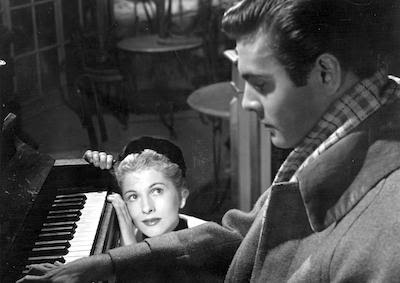
Letter from an Unknown Woman (Max Ophuls, 1948); Yi ge mo sheng nu ren de lai xin (Letters from an Unknown Woman, Xu Jinglei, 2004)

A pair of unknown women 

(WARNING: details of Stefan Zweig's story, on page or in the big screen, are explicitly discussed!) 

Speaking of great, what other word can you use to describe Max Ophuls' Letter from an Unknown Woman? Hollywood refused to allow Ophuls his trademark long shots but even so you recognize the Ophuls style--in shorter gasps perhaps but thrillingly alive. The characters are filmed--caught if you like--in constant flux, literally and dramatically, fully aware that their life at any moment will irrevocably transform, like moths in an oil lamp.

Tuesday, March 22, 2016

Crouching Tiger, Hidden Dragon: Sword of Destiny (Yuen Woo Ping, 2016)

Semi-crouching Tiger

Amazing how under certain circumstances critics' reactions are so ridiculously uniform, so hilariously predictable down to specific complaints on specific titles. Crouching Tiger, Hidden Dragon: Sword of Destiny (2016) is the acknowledged sequel to Ang Lee's Crouching Tiger, Hidden Dragon (2000), so naturally mainstream reviewers compare the former to the latter, almost always unfavorably; Ang Lee is an award-winning director, so folks rhapsodize about his poetry elegance subtlety (often to the sequel's disadvantage); Lee did not direct the sequel (translated: turned down the offer) and the job went instead to the first film's action choreographer, so of course they pooh-pooh the action as being more vulgar, less lyrically staged and shot.

It helps I think to be a fan of the cinema with at least passing familiarity, instead of a clueless gwai lo sampling the picture only because it's the follow-up (translated: shameless cash grab) to a Best Picture nominee. The original Crouching Tiger was in my book  one of the biggest swindles in recent years, a movie that took everything fun about the genre--the outrageous choreography, the seesawing emotional tone (from low slapstick to high tragedy and back), the no-nonsense fast-paced filmmaking--and ground it all down via emery board to a tonier more Oscar-worthy gleam. 


Sunday, December 15, 2013

Letter from an Unknown Woman (1948 and 2004)--tribute to Joan Fontaine (1917 - 2013); Shrek Forever After (2010)

(In tribute to an actress who, if I don't exactly consider great, did appear in one of the greatest melodramas I'd ever seen. As famous as her face and roles was her lifelong feud with sister Olivia de Havilland; with this one film in my book she both settles the sibling rivalry and cements her reputation amongst the cinema immortals)


Thursday, September 26, 2013

The Grandmaster (Wong Kar Wai)

Once upon a time in China

Watching this one wants to ask: why would Wong Kar Wai want to do a film on Yip Kai-man (also known as Ip Man)--the famed martial-arts master who taught Wing Chun to Bruce Lee--in the first place? 

Sunday, June 06, 2010

Filipino films in Brazil; Splice (Vincenzo Natali, 2009); The World (Jia Zhang Ke, 2004)


Filipino films in Brazil!

From June 9 to June 27 in Sao Paulo and Rio de Janeiro and Brazilia, there will be a showcase of Philippine Cinema, both classical and new,which will include essays by yours truly and by oggsmoggs. If you happen to be in Brazil--check it out! Or click on those links for details.

Raising rugrats

Vincenzo Natali's Splice (2009) is all about the horrors of genetic manipulation and surprise, surprise, it's pretty good. The first ten or so minutes can be pretty murky as Natali gives us a brief precis of the ins and outs of private scientific funding--it's good, but it isn't exactly stuff that will keep us awake at night (or it should--research on possible cures for genetic disorders is shelved in favor of a growth protein for plant crops--but doesn't).

What might keep us awake are the consequences resulting from reckless experimentation by two scientists, Clive and Elsa (yeah, yeah, I know--the first names of two actors involved in what in my opinion is the greatest horror film ever made, not to mention a direct commentary and major influence on this picture). Clive and Elsa find themselves caring for a creature that looks something like a cross between an albino seal and a chicken, and run the gamut of nightmarish parenting experience from fussy eater to sudden chills and fever--anyone and everyone who has ever handled a child will be nodding their heads in recognition. 

The 'child,' now called Dren (their corporate name said backwards), grows up to be a slim young woman, beautiful and repulsive and graceful and awkward at the same time--yes it's that stage of growth, folks, the dreaded teen years, when hormones run wild and your gangly little girl will grow up in all kinds of startling, sometimes downright bizarre, ways.

I especially like the dynamic built into the script: Elsa initiates the whole thing, locking Clive out and having her own way with the fetus in the privacy of their work lab (Clive all the while pounding at the door and yelling impotently); when the child is 'born' Elsa is the nurturing mother, all coos and delight, while Clive stands back, resentful and even, at times, openly hostile. When the little chicken grows into a gangly and later strangely graceful young girl, roles are reversed: this time it's Elsa that feels threatened and Clive that steps forward to offer Dren advice and support. 

One appreciates the fact that Natali doesn't go for the cheap scare, the easy gross-out; if frightening and horrifying things happen (and they do), it's for a reason, it's because Dren (and even Clive and Elsa) are following their biological instincts, indulging in everything from power struggle to sexual play to the need to reproduce, to spread one's progeny. 

Natali has a gift for showing the occasional startling image--Dren, for example, hanging upside-down like a great albino bat; or Dren's face looking up through murky water, not a bubble issuing from her nose.

This sort of biological horror has been done before, of course, and better--David Lynch played on our fears of childrearing with his Eraserhead (at one point, Dren does resemble the horrifyingly smooth and gleaming monster child in Lynch's film). David Cronenberg has made the genre of gynecological horror his own, and one can see what part or stage of development in Dren was inspired by what Cronenberg film--the bag containing the fetus, for one (The Brood), the potent stinger with its venom that seems to induce some kind of anaphylactic shock (Rabid); even the gradual development of Dren according to some haphazardly created mutation process (The Fly).

Natali does his best, but he doesn't quite have Cronenberg's ability to give his monsters that quality of wrongfulness, that same sense of shame--one might call Cronenberg horror cinema's first (or at least finest) pornographer, his camera functioning as an unflinching record of the obscenities the human genital (male, female) is capable of producing (or reproducing). That said, Natali's film is a welcome minor addition to the genre.

Beijing Disneyland

Jia Zhang Ke's Shijie (The World, 2004) might have been the template on which Greg Mottola's 2009 comedy Adventureland (a movie I liked) was based. Both are about young men and women working in a theme park, both are basically love stories set in an unusual and metaphorically rich location, only with Shijie Jia captures an entire social movement--the migration of provincial workers to China's urban centers (in this case, the Fengtai district of Beijing)--while Mottola confines himself to the summer employment activities of high school graduates. There is a love story in both pictures, only in Shijie it's told in a considerably quieter, grittier manner, with fidelity to the way young men and women actually talk to each other, and with far less attention paid to the audiences' presumably brief attention span 

Adventureland is basically an entertainment, a teen movie that takes off on the idea that the backstage shenanigans in an amusement park are themselves a source of amusement. Jia's intentions for Shijie seem to be considerably more ambitious: the park stands for the freedom the people in the film strive for but never quite achieve; at the same time, at some level, the park also stands for the world--a considerably diminished world, a world where its wonders have been transplanted, their magic miniaturized and sanitized for safe-as-houses entertainment. 

And yet, and yet--various park attractions afford Jia the opportunity to play global traveler, to create odd juxtapositions and bizarre effects. The Eiffel Tower--at a third of its real height, the tallest single structure in the park--looms over all, from the rocks of Stonehenge to the Pyramids of Giza to the Bocca della Verita (Mouth of Truth) in Rome; St. Peter's Basilica rises to roughly man height, its colonnades welcoming inch-high pygmies (you imagine) into its all-encompassing arms; New York's Twin Towers stand proud and defiant, as if miraculously resurrected by the park's creators. This in effect is Jia's final paradox--that this film, so critical of globalization, is also a celebration of that same globe, of the world and all its wonders, and that there is magic and enchantment a-plenty, if only the people wandering amongst them could but see it. 

Saturday, July 25, 2009

Xiao chen zhi chun (Spring in a small town, Fei Mu, 1948)


Xiao chen zhi chun (Spring in a small town, Fei Mu, 1948) is, for the record, considered the best Chinese film ever made by both the Hong Kong Film Awards Association and by the Hong Kong Film Critics Society.

That's a fearful burden for any film to bear (even Welles' Citizen Kane), and the highest praise I can think of is that one understands its present high reputation (it used to be criticized by the Chinese government for not being sufficiently political, though one suspects the real problem is that, as Wade Major's essay accompanying the DVD puts it, the film emphasizes personal problems and interiorized drama over explicit issues and nationalist sentiments). Fei's classic is a haunted film, full of moons framed by drifting clouds, strange slow dissolves within the scene (what, you wonder, do the dissolves mean and why at that particular moment?) and sad, silent rooms drenched in wordless mystery.

Fei employs immediate setting as a reflection and extension of character. The broken house symbolizes not only the husband Liyan's poor health but the country's--it's set immediately after the Second World War, when China had yet to rebuild from the sufferings and devastation inflicted on it by Japan. The wife Yuwen finds herself often walking alongside a partly wrecked wall, and as the film progresses one can't help but suspect that she projects her view of her self on that wall, that she feels her life to be every bit as desolate, as useless, as that wall. When the doctor Zhichen arrives to pay Liyan a visit we first see him walking down an open road, a symbol of approaching change. When Yuwen comes out to greet the new visitor (who, as it turns out, was a former lover of hers), and is framed with broken wall to the left, green shrubbery to the right. It's as if she were already caught--or trapped--between the two worlds represented by husband and ex-lover.

The camera often moves in on characters to break up the often flat-looking black-and-white imagery. It attempts to bring the imagery to life, so to speak, by giving depth to empty space, solidity and thickness to objects and people.

Then there's the body language--Yuwen first introduces herself to Zhichen as a formal hostess, with both hands linked together under her breast (the hands look as if they were under great tension, ready at some signal to pull her apart). Liyan is often caught reclining on an ornate chair or canopied bed or against the rubble of a broken wall--resting, in effect, on evidence of his former wealth or evidence of its present ruin. Zhiyang is often photographed in relaxed, confident poses (save for one scene where he presses himself flat against a wall to hide from annoying, innocent Mei, Liyan's younger sister).

Perhaps the single most overwhelming impression one has coming away from a viewing is of a hypnotically leisurely pace. Fei almost always dissolves to the next scene (and as mentioned, will sometimes dissolve in the middle of the scene, for no apparent reason), he will hold a shot for as long as the character within the shot needs to finish his or her errand or bit of business. This languorous rhythm has the effect of heightening the realism (one thinks of the celebrated kitchen scene in Welles' The Magnificent Ambersons, made six years earlier--strange, but that film seems so much more immediate and modern (despite its turn of the century setting) than this, Fei's masterpiece) and intensifying the eroticism (the often silent, often wordless meetings between Yuwen and Zhiyang have the breathless impact of outright sex in today's more explicit (unfortunately, in my opinion) age). When Zhiyang suddenly seizes a wounded hand and presses it to his lips, the act has the effect of curling one's startled toes.

Fei's film is often called subtly understated, with the exception of the voiceover by Wei Wei, the actress playing Yuwen; I tend to think of the device (describing a scene in words while presenting said scene onscreen) as something Robert Bresson will develop and perfect later, in his own films. Also think everyone from Wong Kar Wai to Edward Yang to the great Hou Hsiao Hsien must have been influenced by this little chamber drama (not to mention Tian Zhuangzhuang with his acclaimed remake).

One shot occurring early on in particularly stays with me: Old Man Huang looks for his Liyang, pokes his head through a hole in a wall, then walks around said wall to talk to the young master; the camera doesn't follow the faithful servant around but instead moves forward to peer through the hole in the wall.

Why does the camera follow Huang, which would be the more natural choice? Is Fei celebrating some value through the move--elegance, perhaps, or economy of effort? I don't know; all I do know is that the shot is an inexpressibly beautiful one, that it haunts me to this day. My favorite explanation is that Fei does it because he simply can, that the move is Fei's way of expressing the freedom of the camera: to follow or not follow, peer or not peer, surprise or not surprise. Freedom to make personal choices, on the part of the filmmaker or characters--one of the film's central themes, and one of the reasons the picture got into trouble with the authorities. Seems to me Fei knew what he's doing, after all.

Maybe not my favorite (I'd have to set aside Hou Hsiao Hsien, Edward Yang, Tian Zhuangzhuang and King Hu among others), but definitely a great film.

Friday, May 01, 2009

Sansho the Bailiff, Come Drink with Me, Two Lovers

James Gray in an interview says The Yards (2000) came out of his father's job of supplying parts to the New York subway system, that Little Odessa (1994) and We Own the Night (2007) came out of years growing up knowing Russian gangsters, that We Own the Night also came from the fact that his stepbrother was a police officer. In the case of his latest film Two Lovers (2008) the project is, or so he claims, his least autobiographical and most personal work to date.


Tuesday, December 02, 2008

American kids view 'Not One Less,' 'Grave of the Fireflies,' and 'Whispers of the Heart'

(Warning: plot twists and general story for all three films discussed in detail!)

Three films about children

Some weeks back I talked to some kids about the Philippines, showed them Lino Brocka's Insiang and Ramona Diaz's Imelda and then moved on to talk about China. End of that series of lectures I decided to show them a film that I thought would give them an idea of if not present-day China at least China at a transitory stage, from being a purely communist country to a country with a communist government and capitalist economy.

Zhang Yimou's Yi ge dou bu neng shao (Not One Less, 1999)--his finest film, in my opinion, is about a substitute teacher named Wei who is promised a bonus if she can keep her students attending school. It's a portrait of what life is like for the majority, the people who live in the countryside and (as opposed to urban dwellers) struggle to comply with the government-mandated nine years of schooling; even in recent years the issue of education in the countryside is still a problem. "This would have been before China's economy really started kicking in," I reminded them. "Even in China, the countryside's usually the last to benefit."

Monday, September 15, 2008

Time Magazine's The Best Asian Films of All Time

Since when was New Zealand a part of Asia?

Glad to see Himala there, would have preferred
Tatlong Taong Walang Diyos (Three Years Without God, Mario O'Hara, 1976), but the others--Shall We Dance? Gwoemul? The Asian bench is much deeper than that.

Sunday, July 01, 2007

Edward Yang (11/6/47- 6/29/07)

I wished I saw more of his films. Didn't like Mahjong (1996); loved his two best-known works.

Here's a reprint of an old article I wrote about them:

Directed by Edward Yang

You know that you’re in for something when a filmmaker opens his film with a wedding. Movies supposedly end with weddings--it’s the happy finish they all strive for, the neat resolution to all that conflict. Weddings are such large-scale events involving so many people in a complex ritual that when a film begins with one, it sets up the anticipation that the film will deliver even more complexity, on an even larger scale. This is either the mark of a filmmaker who hasn’t the slightest idea what he’s doing or the mark of a filmmaker so supremely confident he can signal his intent to achieve greatness--and deliver on his promise, more or less.

Edward Yang’s Yi-Yi (A One and a Two 2000) is possibly one such film. It has a running time of a hundred and seventy-three minutes--nearly three hours--yet hardly feels as long. It’s an elaborate weave of several different threads involving over a dozen characters, yet after the initial confusion--which, come to think of it, doesn’t feel much different from being the new arrival at a wedding reception--the characters sort themselves out and their stories unfold swiftly to their respective ends. There’s A-Di, the blushing groom--blushing because Xiao Yan, the woman he’s marrying, is several months pregnant; there’s Yun-Yun, the woman A-Di really loves, who crashes his wedding; there’s the groom’s sister Min-Min--and her husband NJ, who during the reception runs into Sherry, his first great love; and there’s their two children--elder sister Ting-Ting, younger son Yang-Yang, the latter being cruelly teased by girls. Finally, there’s the old matriarch who sits in one corner, silently disapproving of her family’s shenanigans.

Yang uses the wedding the way a conductor does his baton, as a signal for everyone to pick up their various instruments and begin the symphony. It’s a discordant piece of art, full of shapeless melodies and random notes, yet played so softly and lightly that you don’t mind the lack of structure. It could be something you hear warbling in the background, like Muzak in an elevator--only Muzak was never so enormously complex, or compelling. Part of the magic of Yang’s film is in the way he pulls the odd vivid image or sudden bit of drama out of that warbling, like a magician plucking flowers and rabbits and coins out of the thin air, or from one’s ear; part of the magic is in how Yang, in the making of this seemingly aimless tapestry, allows certain strands to clearly emerge. NJ represents possibilities exhausted and forever lost--given the chance to renew his affair with Sherry, still he hesitates; his son Yang-Yang represents the unlimited and as yet unrealized possibilities of youth, possibilities he feels the need to share those possiblities in odd ways--by taking, for example, pictures of the back of people’s heads, to show them the other 50% of the world that they never see. A-Di represents the craven, opportunistic Chinese, always fearful of the future, always seeking signs and portents to avoid bad luck and shortcut good luck into his life (ironically his salvation lies in a totally unforeseen knick-knack he happens to pick up); Ota, the Japanese video-game designer NJ is courting for his company, represents the outsider philosopher who serenely accepts life as it is. Ting-Ting’s brush with early love involves a boy named Fatty who’s obsessed with her best friend, Lili; Ting-Ting loves Fatty who loves Lili who loves someone else…as with all love triangles, this one is inherently unstable, with no one left satisfied--a state of being Ting-Ting’s father NJ would find uncomfortably familiar.

In its last twenty minutes, Yang rolls up his sleeve and gives us five climaxes in a row, in so smooth and gentle a manner that we aren’t quite sure just what has happened. The audience is free to go home, only some don’t--they sit and blink for a few minutes, stunned, unbelieving. Perhaps the highest compliment you can pay a film is of experiencing such an intense feeling of life unfolding before your eyes the line between onscreen and offscreen life has blurred; you wonder for a moment if the film is really over, and if ordinary life has begun again. It’s a rare feeling to evoke in people--rare because it’s seldom attempted, and also because it’s difficult to do--which may be why so many have responded so strongly to the film, and why they treasure it so.

It’s instructive comparing Yi-Yi to what many consider his masterpiece, A Brighter Summer Day. The story of Yi-Yi could easily take place in any major city anywhere in the world--its themes of regret and acceptance, obsession and unrequited love, are universal enough to be understood by anyone (the probable reason why this is Yang’s first film to win commercial distribution in the United States). A Brighter Summer Day happens in a specific time and place--Taiwan, 1961, some dozen years after millions of Chinese were forced into exile on this island by the communist takeover of mainland China.

Early on, Yang thrusts you in the middle of things--adolescents milling about, the chanting of a faintly obscene childhood rhyme, a gang rumble. Through snatches of dialogue and sharply sketched scenes, Yang builds a devastating portrait of Taiwan at this point of time. The story of one man’s arrest and interrogation points out the irony of men and women fleeing to Taiwan to escape oppression, where the Taiwanese government, fearful of communist infiltrators, is just as oppressive if not more so; the scenes set in classrooms show how it isn’t just the adults--the schools are also run like prisons, with punishment meted out for the smallest offenses, and expulsion a very real possibility. The adults rarely if ever rebel; you wonder if it’s something in Chinese culture, in their reverence for authority and the aged, that makes them so passive politically. But the youths do, and Yang’s depiction of the gangs and their confrontations are horrifyingly violent, made even more unsettling by the coolly distant manner in which Yang shows us the violence.

Towards the end, Yang piles up the incidents so much that he risks melodrama; his transitions from one climax to another are shaky, not as precisely controlled as the early half of the film--or, for that matter, as the climaxes in Yi-Yi. Yi-Yi shows no such shakiness in the course of its three hour--throughout the film you feel Yang in command of his material. But Yi-Yi also doesn’t have that sense of vast forces on the move, of history captured and brought to thrilling life. “Yi-Yi” doesn’t have the sense of a filmmaker going all or nothing, risking the audience’s trust and his own credibility to play an exciting game of narrative “Chicken”--he wins in A Brighter Summer Day, but it’s not a clear victory. Overall, I tend to prefer the earlier film (this being more a personal preference than a reasoned and logically arrived-at choice). The two pictures do highlight Yang’s range and development as a filmmaker--Yi-Yi being Yang at his most assured and masterful, A Brighter Summer Day being Yang at his most ambitious, exciting, inspired.

A final note: there are critics who have compared Yang to Japanese master Yasujiro Ozu. You can see the similarities--Yang revels in commonplace concerns like Ozu and shares his narrative reticence, not to mention reluctance to give the audience easy melodramatic highlights--yet the analogy may not be entirely appropriate. Ozu’s films are, if anything, even more stringently ordinary, use simpler, even more elliptical narrative strategies than Yang does; Yang sometimes feels the need to resort to grotesqueries, like the massacre alluded to near the end of Yi-Yi (the violence in A Brighter Summer Day is better justified, a symptom of the turbulent times).

Ozu’s editing, despite what people think, is actually quite brisk--he never holds a shot longer than necessary to make his point (unlike certain shots in Yi-Yi, which tend to be long, even pretentiously so). His compositions have a lovely asymmetry to them; he doesn’t presume (or rather, he does presume) to use many other camera angles than his preferred one, that of a man sitting cross-legged on a tatami mat. Yet his visual style is so uninsistent and clear that you can for the most part ignore it, leaving you free to concentrate on the narrative.

And Ozu’s understanding of people is complete. For someone who never married or raised a family, you believe in the children, husbands, wives, girlfriends, mothers, uncles, spinsters in his films; he never strikes a false note, or makes you doubt them for a second.

Yang can be excellent at characterization, but you can’t help but feel that he’s stronger with men than with women. The adolescent males were brilliantly realized in A Brighter Summer Day but the only truly memorable female character, Ming, seems more like a Madonna-whore caricature (rather, a Madonna-disguised-as-whore caricature). In Yi-Yi, the potentially major female characters, the silent matriarch and Min-Min, are relegated to the sidelines--the matriarch suffers a convenient stroke, while Min-Min flees into spiritual retreat in the mountains for most of the film. Daughter Ting-Ting is pivotal, but her storyline is dominated by the love-obsessed Fatty, who seems more vividly realized, more full of unruly life, than Ting-Ting could ever hope to be.

Finally, Ozu’s films appear so conventional that they were never really seen as arthouse films--they had a steady and loyal audience, they consistently made money, and they never ran up to three hours (you feel Ozu would never presume on his audience that way). Yet Ozu is great, with something like fifty films devoted to the details and nuances of the Japanese family. It’s an enormous investment of time, money, effort and imagination on what one might assume is a rather limited subject matter, but watching the films themselves, you don’t see this--Ozu’s close attention, if anything, expands his subject, transforms it, makes it worthy of his masterful examination. You might say Yang needs to do his own fifty or so films before we can even begin to compare him with the likes of Ozu.

Still, Yang has his moments, and he has certainly found his own, just-as-distinct voice--somewhat more nihilistic perhaps, capable of surreal wit, of sudden bursts of violence. And he speaks more clearly to the younger generation, familiar as they are with emotional terrain Ozu with all his films never really covered--alienation, self-destructive despair, the cold regard of a dispassionate eye*. With Yi-Yi and even more with A Brighter Summer Day, Yang is yet another welcome voice to the rapidly expanding panoply of voices that is Asian cinema.

(First published in Menzone Magazine, 2001)

*On careful consideration, I suppose I'm mistaken on this--Ozu's films do have their share of such sentiments. I'm thinking, off the top of my head, of Setsuko Hara in Banshun (Late Spring, 1949): certainly she was isolating herself from the rest of society in order to care for her father; certainly the father felt despair at her leaving him; certainly Ozu's camera can at times take on a distant, even frosty aspect. I do think Ozu has difficulty speaking directly to young Japanese audiences today, and I suspect it's more a failure of the audience's imagination than Ozu's--they'd rather have their daily fix of alienation from a popular manga, or anime series (the otherwise enjoyable Death Note comes to mind)). Postscript added 5.17.08

Saturday, April 28, 2007

Jeonju, day 4: The Go Master (2006); Who's That Knocking at My Door? (2007)

You don't know what you have even when it's in front of you; that's the truism that popped into my mind after reading the amazing critical reception given to Tian Zhuangzhuang's latest film on Go-playing legend Wu Qingyuan, as typified by this short scribble by NYT's AO Scott. How many times have we complained about biopic cliches, especially sports biopics and in particular chess biopics? The hyped-up action sequences; the impossibility of giving the audience any sense of the game's shape and rhythms and strategies; the need for a big finish and win--or at least a Pyrrhic victory that shows the hero's a winner at heart.

And when we finally get a film that avoids all those cliches, finds a subject matter that sidesteps the need for such cliches and develops a whole other approach towards illuminating that subject? We get cliched complaints about 'lack of drama' and "dull 'n stately."

acquarello of
Strictly Film School has it right, I think; it uses techniques similar to Hou Hsiao Hsien's to depict a "humble, yet remarkable life lived in the periphery of turbulent human history"--Bertolucci's anti-drama The Last Emperor, in effect, done on a far smaller scale, and this time done right.

Actually there's no lack of conventional drama unconventionally (and superbly) realized: when Wu steps into a roomful of cheering Japanese, he smiles uncomprehendingly until a board is paraded into the room displaying a map of China, the Japanese flag spread all over its northeast territories like small pox;when his wife informs him that she's leaving the religious sect they are both part of, Zhuangzhuang cuts to a long shot of the bus Wu is riding as it stops and lets Wu out; he starts walking back, hesitates, turns, walks towards the long-departed bus, hesitates, turns, and sinks to the ground in frustration.

Wu's relationship with his Japanese wife Kazuo is a prime example of Zhuangzhuang's obscure style. We never see the two kiss, or caress each other, or flirt or tease or whisper sweet nothings into the other's ear; instead, Zhuangzhuang gives us an episode where the two go buy a sack of potatoes--Wu lifts the sack up, has trouble, uncomplainingly accepts his wife's assistance. Not a word is said, and the two don't even come into direct physical contact (their bodies are more intimately involved with the sack), but a more sharply poignant image of love and shared hardship I have not seen in recent films.

Key to the film's approach is the way Zhuangzhuang shoots the matches: spare, zenlike sketches where every detail (the clack of stone on wood block, a flash of lightning illuminating the board) stands out in stark contrast to the surrounding serenity, then cuts away from the action to focus on his real concerns. The complexity of Go is suggested, never shown; a few brief details (shots of the bewilderingly complex game board; mention of Wu's innovative 'Four Corner Star' strategy, early in the film), but not much beyond that, which actually adds to the fascination: a sense of mystery surrounds the game (the rules are actually simple enough; it's the tactics used that are incredibly complex).

Zhuangzhuang not just shifts focus from the conventional priorities of a sports biopic, but shapes his storytelling to reflect the nature of the game--if in Go the goal is to 'take territory,' usually in the corners, where boundaries help make the conquest easier, then take the sides using the corners for boundary, then the center using sides and corners for boundary. his film follow a similarly elliptical arc. He begins by focusing on disparate physical details (sounds, shapes, textures, even smell (someone at one point farts during a game; the audience titters before turning full attention back on the board) and facial expressions (or relative lack of)), establishes their significance (at one point, a physically incapacitated player insists on getting up because he needs to "watch while my oponent ponders!") before making a stab at attacking the inner essence of a man playing the game.

Chang Chen's performance embodies the essence of Go playing. Outside of competition he's a geek with thick glasses, waddling around in a ducklike gait as he shuffles out of peoples' way. In competition he has the intensity of a world champion, with a laser beam stare and ears that shut out all other distracting sounds and voices. To understand his character you need to understand not the game but the kind of mindset focused on winning the game; any change of circumstance in his life (fallen opponents, unstable religious figures, a world war) he responds to with a blinkered look, incapable of understanding how such a thing--how such a betrayal--can be visited upon him.

Unlike recent examples such as Inarritu's Babel, Yang Heah-hoon's Who's That Knocking On My Door? does the we-are-all-interconnected bit (two couples and a renegade are tied together by a dead body and the internet) with deadpan flair and a genuine sense of perversity. The director creates characters interesting enough to draw you in--a bullied student who locks himself in his bedroom and plots revenge online, a hyperchondriac zookeeper with strong psychotic tendencies--and grounds them in enough realistic, understated detail that you find yourself accepting his rather unique sensibility, a mixture of roughly equal parts Larry Clark, Robert Bloch, Kurosawa Kiyoshi. Objects and motifs fly about--a flute, a dart gun, a cellphone camera, a ball of crumpled paper (the film gives the ball a fetishistic quality that recalls the fluttering plastic bag in American Beauty, only where Mendes' footage was mostly dull, Yang achieves real existential horror)--all overlaid by the tapping of computer keyboards. Online remarks creep across the screen, giving advice, offering condolence, threatening vigilante justice; at one point Yang fashions a terrifying episode involving a stolen light bulb and a gang of angry stall owners that has you by turns rooting for and crying out against the psychotic hyperchondriac.

But it isn't all clever plot twists and shock value; there's a sharp poignancy to the characters' loneliness, and a generosity of spirit to everyone, even the sexually predatory bully, that makes you confident whatever new wrinkle the plot may acquire, the director won't 'cheat'--that is, he won't twist without prior preparation, and said twist won't take the most conventional, least interesting direction.

The film ends as it begins, with a figure balanced precariously on ice. The figure, facing a hole in said ice, walks carefully around the hole, the ice around him creaking and threatening to give way. It's as neat an image as anything one might think of to summarize the director's view of life--as a creaking, threatening brittle medium on which to skate, carefully avoiding the open breaks.

Saturday, February 17, 2007

Man cheng jin dai huang jin jia (Curse of the Golden Flower, Zhang Yimou, 2006)

Man cheng jin dai huang jin jia (Curse of the Golden Flower, Zhang Yimou, 2006)

Excerpt:

I'm not sure if we can call Zhang Yimou a great filmmaker, but in the '80s and '90s he was certainly a force to be reckoned with. For director Chen Kaige he shot "Huang tu di" (Yellow Earth, 1984), a film that announced to the world the presence of the "Fifth Generation" of mainland Chinese filmmakers; three years later, with "Hong gao liang" (Red Sorghum), "Ju Dou" (1990), and "Da hong deng long gao gao gua" (Raise the Red Lantern, 1991) Zhang helped establish the house style of the Fifth Generation--at once old-fashioned in its embrace of melodrama ("Ju Dou" owes a plot twist or two to "The Postman Always Rings Twice") yet new in its utter lack of cynicism (the unabashedly romantic flavor of "Hong gao liang's" love scene); voluptuous in its use of colors, shapes, textures (the dyed cloth in "Ju Dou" filling the screen with ribbons of fluttering scarlet, purple, gold) yet somehow austere in intent and ultimate impact (repeated shots of the compound's imposing rectangular floor plan in "Da hong deng" emphasizing the heroine's imprisonment). The 1999 "Yi ge dou bu neng shao" (Not One Less) subordinated that gorgeous visual style to the story of a young teacher struggling to keep her class of poor student peasants together. The result, I thought, was a film more persuasively moving (thanks to its countryside grit and simplicity) than any of his earlier efforts.

He's struggled ever since, sometimes in interesting ways: "Wo de fu qin mu qin" (The Road Home, 1999) is a romance told in flashbacks, as the lovers' son arrives from the big city to bury his just-died father (I liked it well enough, save that the mother seemed a tad too self-indulgent); "Xingfu shiguang" (Happy Times, 2001) felt like a reworking of Charlie Chaplin's "City Life" (blind girl given the illusion of a better life by an equally poor benefactor) and suffers in comparison (you also couldn't help but feel sexually predatory overtones--all these middle-aged men, surrounding a helpless blind girl--in what Zhang strenuously tries to present as an innocuous situation).

Monday, January 15, 2007

Curse of the Golden Flower (Zhang Yimou, 2006)

Curse of the Golden Flower is interesting, to say the least. Cinematographer Zhao Xiaoding's work isn't as precise or elegant as Chris Doyle's in Hero, and while the action director Ching Siu Tung has the chops to rival Yuen Woo Ping (he directed A Chinese Ghost Story, and did the action choreography for Peking Opera Blues, among many others), Zhang still doesn't quite know how to photograph his choreography--too many cuts, in too confusing a fashion (give me Ronny Yu's direction in Fearless--still the finest martial-arts action film I've seen in recent years).

I think Zhang Yimou knew this, and tried to compensate by going berserk on the costumes and sets--Gong Li's gowns rival Princess Amidala's in ungainliness, and her nails seem to have been done by the same manicurist that does Ming the Merciless; Chow Yun Fat's headgear could have been King Midas' underwear, and you don't want me started on his throne, a hemorrhoid sufferer's literally wet dream.

Much of it is lush, of course, but I thought the hot pinks, neon greens and radioactive blues were a bit much--think of a supermutated Szechwan restaurant grown to monstrous proportions, or Ridley Scott's Blade Runner set in the Tang Dynasty, only with less restraint. I'm not kidding, you have to see this; it's the kind of production design found in multimillion dollar adaptations of cyberpunk graphic novels, only these are for the most part real sets, not CGI-generated nightmares (when they are CGI, they look patently fake). Maybe my favorite comment on the sets claims they look as if they had been done by someone 'channeling Liberace' (on hallucinogens, maybe).

All that aside, it does get compelling, in a The Lion in Winter meets Married With Children meets Henrik Ibsen way; the revelation scene--where mistress confronts wife confronts husband confronts children, ugly truths are revealed, and a brother gapes at his sister in mute horror--should go down in history as a great camp classic.

The basis of the story is Cao Yu's classic Thunderstorm, which single-handedly established modern Chinese 'spoken' theater (as opposed to traditionally 'sung' Chinese opera). Cao Yu (who believe it or not played Nora in a production of A Doll's House--make of that what you will) was critical of communism, but seeing as how the play portrays the bourgeois as inbreeding decadent bastards, the Chinese authorities have wholeheartedly adopted it as one of their own, which may be the reason why Zhang is able to get away with startling moments and imagery under the guise of all that imperial (read; bourgeois) criticism.

It's the scenes of rebellion that makes the film worthwhile: with monumental sets (is that the Forbidden City doubling as a Tang palace?) and literally thousands of extras--the kind of human extravagance today's Hollywood can only dream about--Zhang fashions a startling re-enactment of the Tiananmen Square massacre, complete with tanklike structures inexorably crushing heroic dissidents. He follows it up with a startlingly efficient cleanup job, then by the most ghastly of aftermaths: an invitation of all concerned, rebellious and repressive alike, to sit down together at dinner. It's a sequence of such massive violence and subsequently profound perversity it takes your breath away--I remember a line from James Goldman's play where Eleanor of Aquitaine declares "we are the source of corruption!" but never has both source and consequence been so comprehensively and vividly realized.

Those closing sequences alone justify the film's existence, wipe away all (well--most) suspicions of Zhang selling out (forgiving him his awkward dabblings into the wuxia-pian genre along the way) and establish the man as potentially the finest, arguably the most ambitious, definitely the nuttiest impresario of large-scale spectacles in the world today.

Yep--the world today. Ridley Scott can still do the occasional superproduction, and I hear James Cameron is going all-out digital for his next 200 million dollar bonfire of vanity, but I submit Zhang, with his house style of old-fashioned spectacle cannily extended by CGI effects (still clumsy, but working on it, working on it), backed by the might of the world's most vital economy, will for better or worse (even now I see both possibilities) be the filmmaker to beat in the future. That's my prophecy, right there--you heard it from me first.