Thursday, October 16, 2008

Two Brocka films, out on DVD!

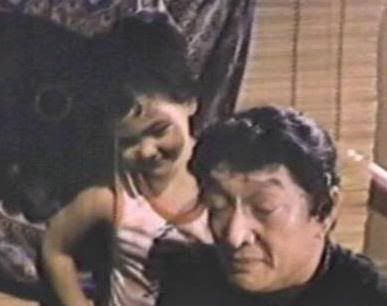
Nino Muhlach and Dolphy in Ang Tatay Kong Nanay

At the Cinefilipino website, with brief articles by yours truly:

Ang Tatay Kong Nanay (My Father My Mother, 1978)

The master filmmaker's one collaboration with the near-universally acknowledged King of Philippine Comedy, Dolphy (Rodolfo Vera Quizon). Screen legends working with famed filmmakers rarely if ever create sure bets; it's something of a surprise, then that the resulting picture from these two is so straightforwardly poignant, laced with just enough humor to wriggle past one's defenses.


Lino Brocka's Tatlo, Dalawa, Isa (Three, Two, One, 1974) shows the filmmaker's versatility in the short form, working with various writers.


Sunday, October 12, 2008

Lino Brocka's 'Insiang' as viewed by American youths


Lino Brocka's Insiang, as viewed by a gaggle of American youths 

(Note: overall story and plot twists discussed in close detail)

Spent a week talking about the Philippines to a few American youths, roughly sixteen to eighteen years of age. Spent a day on general information (location, capital, most common religion, so on and so forth), two days on history (from Lapu Lapu to the 1986 EDSA Revolution), and topped everything off with a screening of Insiang (Lino Brocka, 1976).

I know, I know--I assured the Powers That Be the film had no nudity, showed them the DVD cover's synopsis (which reveals altogether too much of the plot--hid that in a desk drawer, so they wouldn't ask to read it), and apparently it's okay. Just before the start of the screening, warned the young 'uns that this would be a very rough-looking film, no glossy production values, no fancy Hollywood special effects, and some of it will be, uh, strong, as in: a little hard to stomach. Then pressed 'play.'

And straight off we're treated to the sight of Ruel Vernal as Dado, plunging his knife into a pig's throat. Young men and women gasped; no dewy innocents, these, I've heard them talk before of the elaborate tortures in Saw and Hostel with lip-smacking relish, and here they were, horrified at the sight of an upside-down pig gushing blood from a large hole in its neck. Had to explain a few details--that the carcasses are plunged into boiling water to make it easier to shave off the hairs, that the pigs are real pigs, and yes, they're really dead (Hollywood's done so many elaborate effects, I suppose, that they have a difficult time seeing the difference--or maybe they've never seen a real onscreen death and couldn't accept the difference, had to ask me to confirm it, or ask questions to help digest it).

Most interesting of all was one young man who'd previously talked at length and with great enthusiasm about serial killers (he'd even mentioned the Countess Elizabeth Bathory, among others)--he slapped his hands over his eyes and turned away. "I thought you'd be used to this sort of thing," I said. "But those were animals!" he replied. "I don't mind humans (I confess, I raised an eyebrow in response), but animals aren't evil--"

He had a point, I suppose (animals according to certain anthropologists, have no sense of shame or guilt (and by implication no moral awareness)). But go figure.

They were full of questions--is that how Filipinos lived today (about 33% do, I said, mostly in the countryside)? Do you live that way (I was middle class, and grateful for it)? Why do they eat with their hands (it's an art, a graceful one, and not as easy as you'd think)? Then came the moment when Insiang's mother Tonya (Mona Lisa), after cavorting with Dado (the butcher from film's opening), first confronts a shocked Insiang, and is forced to squat and urinate in front of her daughter ("the house is that small," is all I could say). The kids exclaimed again, with gasps almost as loud as in the slaughterhouse scene. Thirty minutes into the picture and if the opening scenes of butchery didn't fascinate (same time it shocked and disgusted) them, the premise (which became clear at about this point) definitely did: Insiang in living with her mother was also forced to live with her mother's lover, in the same tiny shack.

Beyond which point Brocka, dead now for some seventeen years, did not for even a second let them off the hook. It helps that Tonya is such a harpy, Dado an unregenerate bastard, Insiang a quintessentially innocent maiden, each a familiar stereotype ready to be shattered.

Dado is possibly Brocka's masterpiece of a villainous sketch: with the film's very first frame we're introduced to the man elbow-deep in blood, a pig-killer (comments ranged from "poor pigs!" to "that's why I don't eat pork"). Helps that cinematographer Conrado Baltazar's camerawork is so claustrophobically tight, with a plainspoken rhetoric--only in the outdoors and once indoors (during a crucial bedroom scene) does the camera actually move, either sideways or forward; only then, it's suggested, is there sufficient space for motion (and in fact the camera barely had any space available; art director Fiel Zabat revealed that the walls of Tonya's little shack was gimmicked to break away and came back together to make room for the camera). I kept thinking that if Elia Kazan had been able to set A Streetcar named Desire in a similarly crowded, similarly wretched slum area, it would have been s more powerful experience.

I'd broken the film down to three sections, to be viewed each succeeding day (they had thirty minutes a day to view a movie), which worked out fine; I'd mentioned before how perfectly structured I thought the film's script was (from the teleplay by Mario O'Hara, adapted for the screen by Lamberto Antonio), and bang on time at the end of each thirty minute interval there was a narrative hook (in the second segment it was a rape, and its immediate consequences).

By this time I'd noticed how, well, involved these young men and women were--they'd sit down quick as they could, no fuss at all, and watched in rapt attention, even if the film was in Tagalog and they had to read English subtitles (they even asked to have the volume turned up, as if that would help (actually it probably does--the ambient sound and music helps immerse them in Insiang's world)).

Truth and untruth in this otherwise simple film is, I believe a key issue. I pointed out the dialogue, especially responses to questions--when someone was dissembling or duplicitous, he or she wouldn't give a straight reply, but would return the inquiry with another question: "Do you love me?" "What do you think?" "Are the two of you involved?" "Why don't you ask him?" Interesting to note that the simplest answer of all--"yes"--is the most convincing (with its straightforward manner, eyes leveled directly at the interrogator's face), yet ultimately misleading: the responder's words are truthful up to a point; beyond that, though, is a secretly pursued agenda that the questioner never knew about, or even suspected. It is, I suspect, the answer of a full-blown sociopath.

By film's end there were shocked stares and dropped jaws everywhere. I had to explain the very ending, which involved little dialogue ( I believe Brocka followed O'Hara's teleplay up to Insiang's explanation of her actions to her mother; after which is the conclusion forced on Brocka by the Marcos censors, who insisted that a daughter can't completely reject her mother). I brought up what was arguably the most interesting question of all: who was the worse character, Dado (who raped Insiang), Tonya (who oppressed Insiang when she could and first brought Dado into the house), or Insiang herself?

The answers were varied and illuminating. Many picked Dado for using Tonya and raping Insiang; others picked Tonya for her poor treatment of Insiang; still others picked Insiang herself. A few thought "none of them" (meaning each--unconsciously quoting Renoir--had their reasons), a few others said "all of them" (meaning they're all equally rotten). I admitted to agreeing with the Insiang faction, pointing out Insiang's expression as she witnessed Dado's stabbing. "I think she's getting off on it," I told them. "I think it's exactly what she wanted." I noted, however, that my comments were only meant to support my opinion, that there isn't any one correct and definitive answer, and that theirs is as valid as mine.

I pointed out that depending on where you were in the film, your perception of who was the most abusive changed (for the record: I thought it was Tonya in the first segment, Dado in the second, Insiang in the third), and how much say Tonya or Dado's acts eclipse Insiang's would depend on how grievous one felt their crimes were (Tonya for long-term child abuse, Dado for rape and manipulation, Insiang for--well, for manipulation, certainly; anything more is open to argument). One perceptive young man noted "Insiang has become her mother," to which I replied "we all end up as our parents. You're absolutely right--Insiang didn't just learn the skill of manipulating others from anyone; she learned it from the best, her mother, and in fact exceeded her. Insiang learned her lessons too well."

I tried justifying the butchery at the picture's beginning to the serial-killer enthusiast who covered his eyes--I basically called the scene Brocka's opening gesture, his way of raising a baton high prior to launching into the symphony itself. The opening not only foreshadows the film's climax but also suggests (quoting Marlowe) that this is Manila, nor are we out of it; this is how it is in the big city, this is what happens to those unable to defend themselves. This was Brocka's way of saying "physical violence and suffering can be hard, but there's worse--" Bad as the opening slaughter is, I believe that what happens during the course of the film leaves scars more terrible and more permanent than from any mere physical harm.

One young man commented that Insiang reminded him of a cousin he knew, to which I replied: "Of course; this is the Philippines, a land where people eat with their hands, pigs are slaughtered in hellish conditions and a toilet is a cement hole in the ground. But people are still people, they need love, they suffer, they are kind or cruel to each other. Beyond the exotic location and strange details of a faraway society you know these people (and in fact O'Hara based his screenplay on what had happened to his backyard neighbors). You recognize them as people not so different from yourselves, after all."

Postscript: I added by way of conclusion that "every story has a moral, obvious or not so obvious. What was the moral of this film?"

"Never live with your mother and her boyfriend!" "Poverty can make people do terrible things." "Revenge doesn't get you anywhere."

"Good stuff. But more than a bald statement, I think the film asks a question: did anyone in this film come out ahead?"

"Yeah--Insiang. She got away with murder!"

"Did she? Think about it. After walking away from the prison, what do you think she does next?"

"Marry the boy that loves her (Marlon Ramirez)!"

"And then what? Can you imagine what their relationship will be like? Remember the look in Insiang's face while she watched Dado bleeding? Can you imagine that poor boy living the rest of his life with her?

"Which is basically my point. Hate and anger are not so much cyclical as they are viral. They spread, from unseen father, leaving his wife for another woman, to mother, taking it out on her daughter, to daughter bottling it up till it festered and bubbled and finally exploded. Then she takes it to that poor young man--or any other poor young man she happens to meet. It never ends. It never ends."

.

Friday, October 10, 2008

Tropic Thunder (Ben Stiller, 2008)

Heart of dankness

Hollywood comedy isn't exactly doing well when the most commercially successful is a Disney pirate franchise and the most critically praised are the tepid, safe-as-houses fantasies of Judd Apatow (40 Year Old Virgin; Knocked Up). Hats off to Ben Stiller then, for making what easily zooms to the head of the mainstream class as the funniest American-made movie of the year (I know I know, year's not over yet--but these are the "ber" months, when solemn fare hopeful of winning The Annual Golden Doorstop are being released For Your Consideration). In a time when people are craving gigantic CGI effects or digital animation or pictures catering to the so-called sensitive side of fortysomething slackers, Stiller still knows the apparently lost art of going for the jugular, at least when it comes to that ridiculous, self-centered, wholly overpaid activity we know of as moviemaking.

Tropic Thunder--about a group of filmmakers who lose themselves in the jungle, then encounter a band of real-life, fully armed heroin growers--peaks early, which may or may not be unfortunate; truth to tell, nowadays you can't expect a sense of control and timing from directors. You can't, for example, expect the kind of perfectly calibrated sense of mounting hilarity Buster Keaton or Charlie Chaplin used to orchestrate with easy mastery, from titter to yowl to belly laugh to boffo; you can't expect (unlike with Keaton) a distinctive visual style, much less an eye for beauty, in today's comedies. At most you're thankful for the occasional belly laugh, and here you get it when star and actor wannabe Tugg Speedman (Stiller) uses his outstretched tongue to catch the drippings off of movie director Damien Cockburn's (Steve Coogan) severed head (long story). People will squirm in their seats; others will howl (or at least chortle) with glee; suffice to say, the image is a declaration of principles of sorts: it's an announcement to the general public that this will not be a safe movie, it will not for the most part play nice.

Stiller may have shot his load early, but there's enough in this shaggy vet story to make one want to sit it through to the end, more or less--basically what keeps you watching is the subtext that all this is a willed illusion, put together by the filmmakers, and that each of the characters must deal with the fragile nature of that illusion according to their own special circumstances. Hence: Alpa Chino (Brandon T. Jackson) must face his ambivalence about his own sexuality; Jeff Portnoy (Jack Black, blessed with the single funniest line in the picture--won't say what it is, only that he delivers it while tied to a tree) must learn to function despite a massive drug addiction; Kirk Lazarus (Robert Downey, Jr., lampooning his own Method intensity) has to pick out, from all the roles he's immersed himself in, his own true identity (not to mention his native accent); and Speedman must learn how to distinguish everyday reality from the hyperreality of movies. Each lunatic is lost in a literal and metaphorical jungle; each has woven his own silken cocoon about him from which he must extricate himself if he's to survive, and each is too mired in his own obsessions and needs--at least at first--to ever want to do so.

Only three characters have enough sense of self to totally avoid the movie's entangling web of confusion: Rick Peck (Matthew McConaughey, for once more charming than creepy), Speedman's heroically loyal talent agent (he insists come hell or high water that Speedman is contractually guaranteed his own TiVo); Four Leaf Tayback (A sneaky-as-usual Nick Nolte), whose novel was, if you like, the initiating catalyst that prompted a major Hollywood studio into investing millions into the project (in effect turning his personal illusion into a gigantic hyperreal construction (in short, a studio set)); and Les Grossman (Tom Cruise, giving an unreservedly comic turn here--will wonders never cease?), an unspeakable monster of a studio executive with the power to make his slightest whim come true (speaking, for example, over a wide-screen satellite video link, Grossman demands that someone smack the hapless Cockburn for wasting four million dollars on an explosion none of the cameras recorded--upon which someone immediately complies). If these three compared to everyone else in the movie seem relatively stable and focused, that may be because they have something besides themselves to live for: Peck has Speedman, Tayback his novel, and Grossman--well, Grossman's just too damned powerful to care.

As movie satires about moviemaking go, it's not quite as withering as Terry Southern's Blue Movie (I'm still waiting for the filmmaker with cojones big enough to tackle that impossible project); it's not even Blake Edward's S.O.B. where some of the funniest lines are taken verbatim from actual dialogue spoken in Hollywood. But its take-no-prisoners, anything-for-a-laugh spirit is infectious, and Stiller has imagination enough to take his scorched-earth approach as far as he can, which as it turns out is a fairly impressive distance.

Stiller is not an unskillful filmmaker; he's able to evoke the look of various films (Platoon; Apocalypse Now; Deer Hunter; the climactic moment in Bridge on the River Kwai) on the relative cheap. He gives Grossman's office a vast, cavernous quality reminiscent of the War Room in Dr. Strangelove (he even grants Cruise's Grossman a revealing private moment comparable to Chaplin's Hitler figure in The Great Dictator (sans a prop as eloquent as giant globe atlas, alas)). And in Speedman's climactic self-confrontation, he miraculously evokes the creepy, dust-moted light Vittorio Storaro used to illuminate Marlon Brando's insanity during the latter part of Apocalypse Now.

A final note: the heroin growers, members of the Flaming Dragon gang, are no mere cardboard Oriental villains; if anything, they seem to be the most grounded people in the entire picture, with no delusions as to what they're doing and why they're doing it (if they've misunderstood anything, it's the true status of Simple Jack, a gigantic flop of a Speedman movie which they play over and over again on an old VHS tape, and worship unreservedly). Their reaction to the actors and filmmaking crew that have landed suddenly in their midst seem less comical than sensible: they regard the intruders as annoying, possibly dangerous distractions. Rightly so--there's nothing more unlikely, chaotic, and corrosive to one's sense of reality and morality and proportion, Stiller seems to be saying, than a movie crew out to make a movie.


First published in Businessworld 10.10.08

Sunday, October 05, 2008

My Best Friend's Girl (Howard Deutch, 2008)

Your best friends' nose

Howard Deutch's My Best Friend's Girl (2008) starts out interestingly enough; Dane Cook is Tank, the go-to guy for when one's relationship or engagement is in the toilet, and drastic measures are required. As in: the girl would rather marry you than go out with Tank again, so hideous a rectum Tank has been to her (upon delivering one offended date to her apartment, for example, he demands on-the-spot oral sex before he will agree to go to bed with her). "What did I do?" Tank asks, and director Deutch promptly gives us a David Letterman-style countdown of the Top Ten Things Tank Did to Make Her Evening a Living Nightmare.

Tank is paid handsomely for his extracurricular services of course (his regular job is amusingly complementary: training customer-service employees of a corporation manufacturing air purifiers (that don’t work) how to refuse refunds to customers). Of course, the punchline to this setup is Alexis (Kate Hudson), a girl who isn't fazed by Tank's gross antics so much as she's turned on.

In the hands of say the Farrelly brothers this might have gone somewhere, but it doesn't: Tank's sulfuric personality dissipates when he encounters Alexis. What should have been a memorably spiky war of the sexes (with the air constantly blistering with profanity) becomes a wan, standard-issue rom-com (what a disgusting word--as if the genre of Jean Arthur, Katherine Hepburn, Claudette Colbert, Cary Grant, James Stewart, and Gary Cooper had been trash-compacted into a desktop computer hard drive component) complete with a Redemption Scene, a Revelation Scene and a Reunion Scene. Rom-com fans will know--shame on them--what I'm talking about; the rest should run not walk for the exits.

That's all I pretty much have to say on this comedy; of director Howard Deutch, the best I can say of him is that he knows enough about his job not to walk in front of the camera while it's running.

Dane Cook's impact on the viewer may vary, but I do think he makes a convincing and reasonably funny Prince of Darkness. If the movie didn't go softheaded--if, for example, it had followed up the scene of Tank crying while watching Patrick Swayze in Ghost with a scene that punished him for his tears (instead of suggesting that sobbing to Jerry Zucker's mostly unintentionally funny movie actually reveals a sensitive side to Tank's persona)--Cook could have been revealed once and for all as the astringent antidote to Seth Rogen (Knocked Up, The Forty Year Old Virgin). An alternative, in effect, to the man-baby with all the funny lines who wins the hot chick by movie's end that every middle-aged Caucasian apparently wants to be in their most secret of secret hearts.

I like my laughs pitched at a more adult level, thanks. And while we're on the subject of comedies that involve love and hate and the opposite sex, why oh why do we have a surplus of vehicles and leading comic parts for reasonably talented actors, an apparent drought of vehicles and leading comic parts for talented actresses? Hudson is pretty enough, her comic high point I suppose drunkenly singing to a misogynistic rap song (that, or grooving in a strip club), but beyond that she's a pretty face in a blonde wig, nothing more. Cook not only has the meatier, spicier role, he gets the long tracking shot where the camera backs away in mounting fear as the man shifts in slow motion to full Tank mode (Dr. Jekyll never had a simpler, more unsettling transformation into Hyde (well--there's James Nesbitt), and for maybe a second we glimpse a hint of the edge Cook is capable of delivering in a properly honed comedy).

And as if to confirm the fact that the filmmakers are writing strictly for boys, they give some of the best lines and single funniest bit to Jason Biggs as Dustin, Alexis' neurotically creepy fiancé. Biggs basically ages his adolescent persona from American Pie a few years--instead of sexually assaulting an apple pastry, he's sexually assaulting the notion that a sensitive, caring man is the ideal candidate for marriage, or at least a long-term relationship. Biggs throws himself into the role--you can't imagine a more tactile, more hyperaware lover, nor can you imagine anything more annoying; his body seems to contort into all kinds of painful postures at the prospect, the terrifyingly mortal fear that he's going to screw things up for the woman he loves (a self-fulfilling fear, of course). Tell you the truth, the picture isn't so much a romantic comedy (okay, rom-com) as it is a buddy movie--two men who never in a thousand years would admit it, but are deeply involved with each other. Oh, there's this cute blonde wig between them, but really, it's the men that count.

On the title, it's an old joke: "You can pick your friends, you can pick your nose, but you can't pick your friend's nose." Watching this movie is a lot like spending Friday evening with your best bud: you start by drinking beer, eating nuts, cracking jokes, whatever; some time during the night, however, you find your middle finger buried up to the third knuckle in your companion's left nostril, and you'll have no idea how it got there.

(First published in Businessworld, 9.26.08)

El Orfanato (The Orphanage, Juan Antonio Bayona, 2007)

Lost boy

El Orfanato (The Orphanage, 2007) shows the limits, possibilities and differences between a fairly talented newcomer and a mature craftsman in the genre of horror. Director Guillermo del Toro considered Juan Antonio Bayona (the film's director) so promising a protégé that he lent his name as producer and "presenter" to be displayed prominently over the film's title in theater posters.

The film is hardly original--more of a masala of borrowings from various gothic films like Alejandro Amenabar's The Others (2001) to Jack Clayton's great The Innocents (1961) to Robert Wise's The Haunting (1963) to Stanley Kubrick's The Shining (1980) to del Toro's own "The Devil's Backbone" (2001). Bayona inherits a tradition Clayton and Wise helped developed, that Amenabar practice with impressive skill: films slow on pacing, and long on atmosphere, with little to no makeup or CGI effects, the chills developed more through suggestion and creeping camera moves than shock cuts and gross prosthetics (though the film does have its small share of them).

Most impressive of all is Bayona's handling of sound--the lack of your standard-issue creepy music score for the most part, and instead a dependence on ambient sound (the grunt of suddenly burdened floorboards, the soft shriek of old door hinges, the exhalation of an uncovered long-hidden passage). Sound is a much neglected and ignored part of the horror film, something one rarely notes or bothers to praise or even complain about, until a particularly inept practitioner comes along (I'm thinking of M. Night Shyamalan's "The Sixth Sense" (1999), an otherwise well-made thriller spoiled for the most part by the director's use of obvious sounds to mark "boo!" moments).

I'd say the script is, after the sound and musical cuing, the film's most notable element--Sergio G. Sanchez's script gives us the obvious story (Laura, the mother (Belen Rueda) searching for Simon, her adopted son (Roger Princep), who she assumes was kidnapped by a group of ghostly playmates), and the story behind that, almost Jamesian in its ambiguity (again you see the size of the debt owed to The Innocents): is the mother imagining all this, imagining an elaborate vengeance she feels must be visited upon herself, for surviving where others did not? Is this some kind of power struggle between her and Simon, Simon expressing his anger and disappointment at learning that 1) he's not her real son, and 2) learning he's dying of HIV? And is Laura in hunting relentlessly for Simon working out the guilt she feels for rejecting the boy when he demanded attention at an inconvenient time (to a child no time is ever inconvenient; the crisis is always now, it's always a matter of life and death)?

And what of Carlos, Laura's husband (Fernando Cayo)? The sanest and most resilient--well, maybe less resilient than reasonable I suppose--of the three, he seems to play perfectly supportive husband until the point when he finds himself unable to support her and her obsession anymore. Cayo's role is the easiest to overlook of the three, but he's the touchstone, the standard of normalcy by which we measure how far Laura has allowed herself to be pulled by the tide of her obsession. The pain he feels, talking to her, confronting her, is I think no less great than the pain she feels having lost her son.

It's a good script, with an iron emotional core made up of a mother's need to protect her child, and a child's need to make his dreams and desires heard. It plays on a parent's guilt, not just at neglecting her child, but at actually wounding him with a careless word or gesture; what to the parent might be an outburst of impatience at an unreasonable request may for the young one be an unforgivable affront, a confirmation that he or she is not the center of one's world, an ineradicable feeling of distrust or disaffection one may need a lifetime to correct, if ever.

It's a good script, too good I think for Bayona's impressive if immature abilities. Yes he gets some of it right--I've noted the sound, the conservative effects; might as well throw in his impeccable sense of timing, the languor of a moment made tense and unsettling by the off-kilter detail (a group of children playing with a mute scarecrow towering over them; a trail of footsteps leading not out but deeper into a seaside cave; metal tubes in a small closet, too heavy and huge to be of any conceivable use in there). Then there's his use and staging of children's games-- the treasure hunt, an elaborate, unspoken transaction worked out between two people across years, even across the gulf between life and death; the statue game, where the player must acknowledge that he cannot see (and hence, cannot control) the actions of his or her co-players all the time.


At times, however, Bayona seems to lack the confidence to gracefully work out the script--the subplot of an old lady's accident is too hamfistedly staged and shot, and some of the later scares involve the kind of intrusive sound effects he'd so successfully eschewed so far. That old lady also represents several plot loopholes--what did she think she could accomplish in the garden shed, and why now when she had decades beforehand to do so? How'd she escape attention all those years she was working in the orphanage? Why should she have an accident, and at that precise moment?

Amenabar worked with an equally implausible plot in The Others that, when you think about it, is simpler and apparently less moving than Bayona's; but Amenabar is able to wield visuals much more firmly under the dictates of a personal vision, and one is ultimately seduced by the poetry of his camera moves to pay much attention to any mere inconsistency (it helps that Amenabar had the benefit of directing several of the better thriller/fantasy features to come out in recent years). The skilled craftsman uses poor materials to achieve more, while the relative novice overcompensates by collecting everything he knows and throwing it at the screen with the prayer that something sticks. That way works too--this film scares and entertains, basically--but it's done with so much sweaty exertion there isn't as much fun or pleasure to be had in watching.

First published in Businessworld, 10.3.08

Saturday, September 27, 2008

Thomas M. Disch, 1940 - 2008


Thomas M. Disch, 1940 - 2008

The man shot himself, presumably over the burden of many recent adverse events--but then he'd always been fascinated with suicide, and can have a friendly, even mordantly flippant attitude towards it.

So loud was the outcry over his passing that I missed this obituary (or was too busy to notice it) for over two months. No surprise; he's a writer with a special flavor, one not meant to please as many people as possible--only those with particular palates. 

Paul Newman, 1925 -2008


Paul Newman Dies at 83

Good man, good work, will be missed.

Okay, I do have more to say:

He was saddled with a resemblance to Brando in his youth but evenutally moved on to his own distinct persona; he was difficult to take seriously thanks to his prettiness and likability, but managed to make people forget one (at least long enough to make em realize he was good), learned to use the latter in unsettling ways (Hud being I think the best example, Hudsucker being the latest). He managed to work with some great directors (Hitchcock, Altman, Scorsese), but arguably did his best work with low-key craftsmen.

Torn Curtain, The Hudsucker Proxy, Absence of Malice, Buffalo Bill and the Indians his movies with Martin Ritt (Hud, The Long Hot Summer), with Richard Brooks (Cat on a Hot Tin Roof, Sweet Bird of Youth), and my favorite, with Robert Rossen in The Hustler. Him I'll miss.